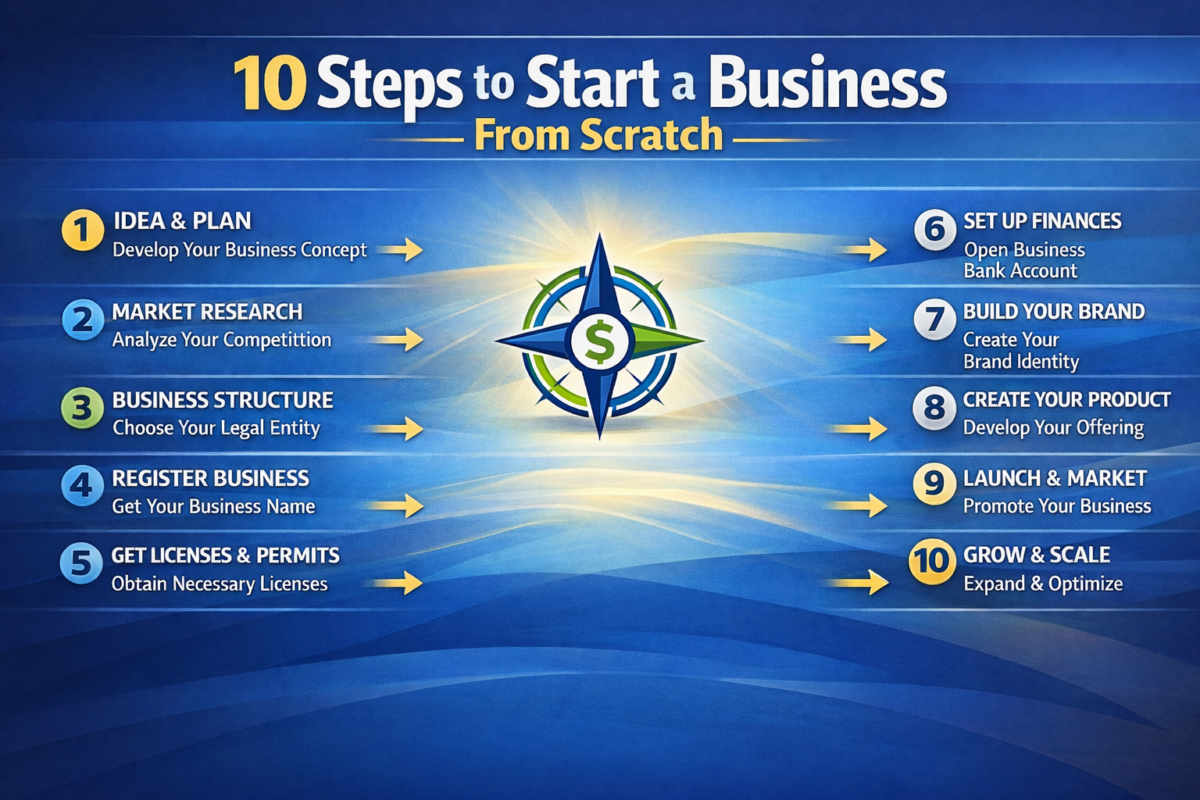
Business credit is a separate credit profile for your company — distinct from your personal credit. With strong business credit, you can qualify for business loans, credit cards, and vendor terms without a personal guarantee, protecting your personal assets and credit score. Building it takes 12–24 months but the process is straightforward.
5 Things You NEED to Get Your First Business Loan | NerdWallet
Source: NerdWallet
Step 1: Establish Your Business Foundation
Business credit requires a legally separate business entity. Before building credit, ensure you have:
- Business structure: LLC or corporation (sole proprietors can't fully separate business credit from personal)
- Business name: Registered with your state
- Business address: A physical address (not a PO box) — a virtual office address works
- Business phone number: Listed in 411/directory assistance
- Business website and email: Professional presence signals legitimacy to lenders
Step 2: Get an EIN and Business Bank Account
An Employer Identification Number (EIN) is your business's tax ID — the equivalent of a Social Security number for your company. Apply free at IRS.gov. You'll receive it immediately.
Open a dedicated business checking account using your EIN. This separates business and personal finances — essential for both credit building and liability protection. Most major banks and credit unions offer business checking accounts.
Step 3: Register With Business Credit Bureaus
The three major business credit bureaus are Dun & Bradstreet (D&B), Experian Business, and Equifax Business. Unlike personal credit, business credit doesn't build automatically — you need to register.
- Dun & Bradstreet: Get a free D-U-N-S number at dnb.com. This is the most important business credit identifier — many lenders and vendors check D&B first.
- Experian Business: Registers automatically when creditors report to them, but you can also register directly.
- Equifax Business: Also registers through creditor reporting.
Step 4: Open Vendor Trade Lines
Vendor trade lines are net-30 accounts with suppliers who report payment history to business credit bureaus. These are the fastest way to build business credit because they don't require an existing credit profile to open.
Starter vendor accounts (report to D&B)
- Uline: Shipping and packaging supplies. Net-30 terms, reports to D&B.
- Quill: Office supplies. Net-30 terms, reports to D&B and Experian.
- Grainger: Industrial supplies. Net-30 terms, reports to D&B.
- Crown Office Supplies: Specifically designed for credit building. Reports to all three bureaus.
Open 3–5 vendor accounts, make small purchases, and pay on net-30 terms (pay within 30 days). After 3–6 months of on-time payments, you'll have a foundation of positive payment history.
Step 5: Business Credit Cards
After establishing vendor trade lines, apply for a business credit card. Business credit cards report to business credit bureaus (not personal bureaus, in most cases) and provide a revolving credit line.
Starter business credit cards
- Capital One Spark Cash Select: No annual fee, 1.5% cash back, reports to business bureaus
- Chase Ink Business Cash: No annual fee, 5% on office supplies and internet, strong rewards
- American Express Blue Business Cash: No annual fee, 2% cash back on first $50K/year
Use the card for regular business expenses and pay the full balance monthly. This builds payment history without interest charges.
Step 6: Monitor and Protect Your Business Credit
Check your business credit reports regularly:
- D&B: Free basic monitoring at dnb.com; paid plans for full reports
- Nav.com: Free business credit monitoring across all three bureaus — the easiest way to track your business credit score
Dispute any inaccurate information immediately. Business credit errors are more common than personal credit errors because reporting standards are less regulated.
FAQ
How long does it take to build business credit?
You can have a basic business credit profile within 3–6 months using vendor trade lines. A strong profile that qualifies for significant business loans typically takes 12–24 months of consistent payment history.
Can I build business credit with bad personal credit?
Yes — business credit is separate from personal credit. Vendor trade lines and some business credit cards don't require a personal credit check. However, most business loans still require a personal guarantee and check personal credit for new businesses.
What's a good business credit score?
D&B's PAYDEX score ranges from 0–100. A score of 80+ (meaning you pay on time) is considered good. Experian Business scores range from 0–100; 76+ is good. Equifax Business scores range from 0–300; 220+ is good.
Do business credit cards affect personal credit?
Most business credit cards do a hard pull on your personal credit when you apply. However, most business card activity (payments, utilization) is not reported to personal credit bureaus — so ongoing use doesn't affect your personal score.
Building business credit is a 12–24 month process that pays dividends for years. Start with your business foundation, get a D-U-N-S number, open vendor trade lines, and pay everything on time. The goal is to eventually borrow in your business's name without a personal guarantee — protecting your personal assets and credit from business risk.