

















The economic architecture of 2026 presents a distinct and challenging dichotomy, characterized by what leading financial analysts at major institutions describe as a highly “unstable” and “K-shaped” macroeconomic backdrop.[1] While high-level indices and artificial intelligence-driven sectors maintain an enviable, record-breaking path higher, the average household consumer navigates a perilous landscape where sticky inflation, currently hovering near a 2.8% personal consumption expenditures (PCE) price index, relentlessly erodes purchasing power month over month.[2, 3] In this climate of persistent financial volatility, passive money management and reactive expense tracking have transcended simple accounting inadequacies; they have become pathways to systemic household financial degradation. This comprehensive YNAB Review for Beginners explores the exact mechanisms through which “You Need A Budget” (YNAB) addresses these modern economic pressures.
As a marketing and financial analytics expert, my objective is to bridge the gap between complex macroeconomic data and actionable personal finance strategies. A massive 51% of Americans expect consumer prices for essential goods and services to worsen throughout the year.[4] In such an environment, financial survival requires a deliberate, behavioral intervention. This YNAB Review for Beginners offers a rigorous, data-rich assessment of the platform’s efficacy. More importantly, it integrates a detailed chronicle of my own personal 34-day journey using the application, demonstrating how real-time tracking, family account-sharing, and comprehensive reporting can secure your financial future amidst the harsh complexities of 2026.
The 2026 Macroeconomic Context: Why Traditional Budgeting Models Are Failing
To fully appreciate the necessity of the tools outlined in this YNAB Review for Beginners, one must first understand the battlefield. The post-pandemic era has officially ushered in a period of structural inflation that behaves more unpredictably and aggressively than historical averages.[2] Standard forecasting models—which traditionally rely on predictable income streams and static, unchanging monthly expenses—are becoming increasingly obsolete and dangerous.
The Death of the 50/30/20 Rule in a High-Cost Era
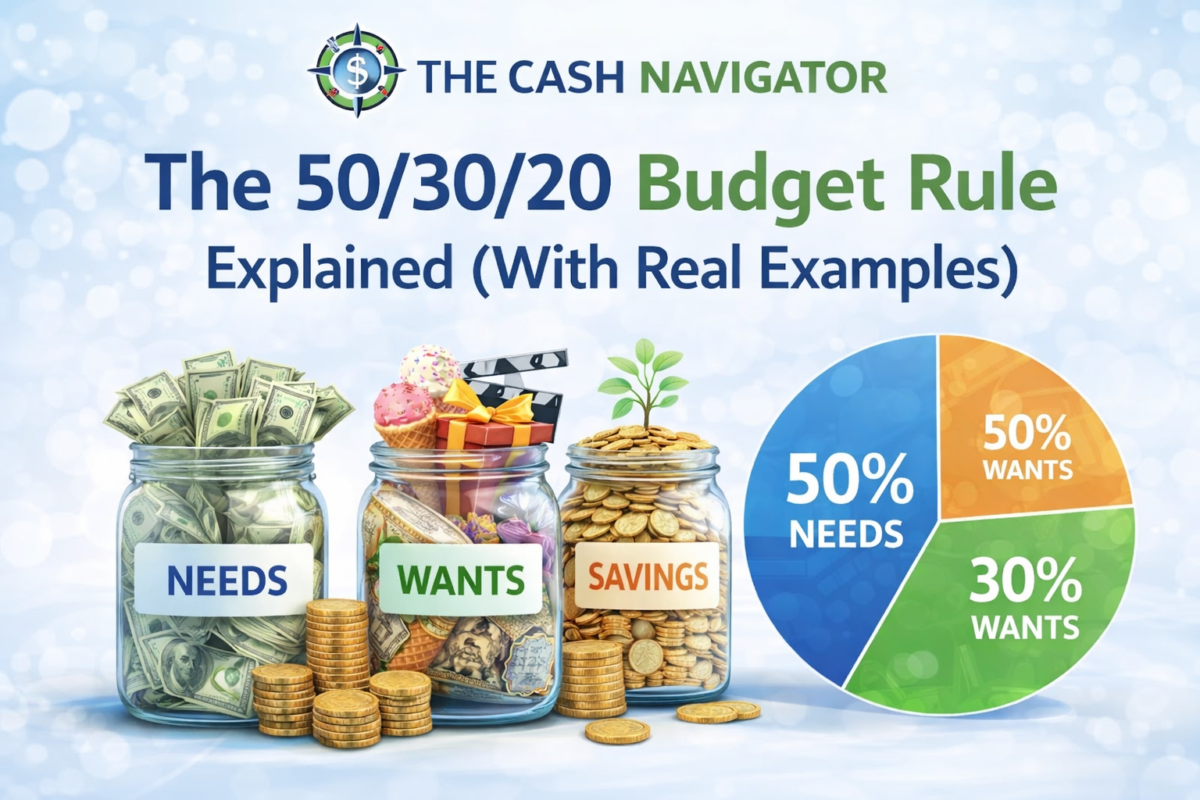
For decades, personal finance advisors leaned heavily on proportional allocation models, most notably the 50/30/20 rule. This rule dictates allocating 50% of after-tax income to absolute needs, 30% to discretionary wants, and 20% to savings and debt reduction.[5, 6] However, this YNAB Review for Beginners posits that in the 2026 economy, this static, percentage-based model is structurally broken for the vast majority of middle-to-lower-income brackets.
With median household incomes lagging significantly behind the explosive growth in housing and transportation costs since 2020 [7], the “needs” category for many American households now consumes anywhere from 65% to 75% of their take-home pay. Mortgage rates that remain stubbornly elevated between 6.25% and 7.00% have widened the affordability gap, forcing prospective buyers to allocate unprecedented portions of their capital toward housing costs.[8] When basic fixed costs balloon beyond the 50% threshold, the rigid percentages of the 50/30/20 rule collapse entirely, leading directly to rapid consumer debt accumulation.
Furthermore, consumer behavior has fundamentally shifted. Active value-seeking behavior and deep consumer caution have become permanent fixtures across all demographic profiles.[9] Nearly a quarter of households earning over $200,000 annually are now engaging in aggressive trade-down behaviors, a striking departure from historical norms where high earners were heavily insulated from everyday retail price fluctuations.[9]
| 2026 Economic Indicator | Current Value / Trend | Strategic Household Budgetary Response |
|---|---|---|
| PCE Price Index | 2.8% Annual Rate [2] | Prioritize “Aging Your Money” to combat the steady, monthly erosion of purchasing power. |
| Consumer Confidence | 33% Fear Imminent Recession [4] | Accelerate aggressive allocations toward emergency reserves to mitigate psychological stress. |
| Housing Market Affordability | Mortgage Rates 6.25% – 7% [8] | Implement strict zero-based category limits to prevent falling into “House Poor” status. |
| Consumer Spending Habits | 70% Maintain Trade-downs [9] | Utilize YNAB’s detailed category templates to ruthlessly audit discretionary spending. |
| Inflation Composition Risks | High Transport & Energy Risk [2] | Over-fund variable essential categories (fuel, groceries) to absorb macroeconomic price shocks. |
This systemic shift indicates that the primary challenge for the 2026 consumer is not a lack of access to financial data, but rather a severe lack of actionable, proactive intent. This is where zero-based budgeting becomes mandatory.
The Core Philosophy: Analyzing the Four Rules in this YNAB Review for Beginners
To understand why YNAB maintains a dominant, near-cult-like following in the fintech sector, any thorough YNAB Review for Beginners must deeply analyze its four-rule methodology. These rules operate less as mere software features and more as a cohesive psychological framework designed to modify consumer spending behaviors permanently. They are specifically engineered to counteract the financial instability and hidden tariff weights identified by major institutions like Bloomberg and Forbes.[9, 10]
Rule One: Give Every Dollar a Job
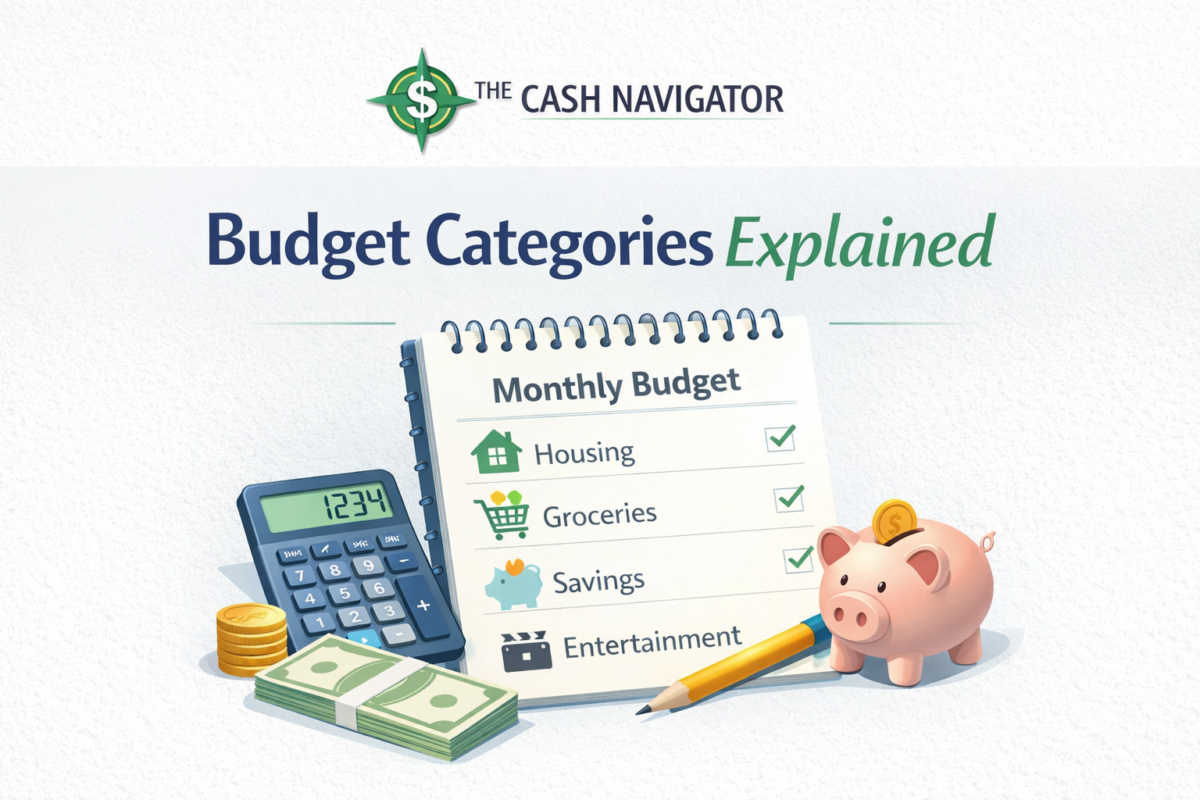
The foundational principle evaluated in this YNAB Review for Beginners is Rule One, the absolute cornerstone of the zero-based budgeting philosophy. This rule dictates that users must evaluate their current cash on hand—strictly excluding any projected or future income—and proactively assign every single dollar to a specific budget categories explained function.[11, 12]
This mechanism directly combats the cognitive illusion of wealth that occurs when consumers view a large checking account balance on their banking app without contextualizing their upcoming, unfunded liabilities. In a year where nearly three in five Americans anticipate making potentially risky money moves [4], Rule One provides immediate, grounding clarity. The psychological impact is profound and immediate: when every dollar is actively assigned to rent, healthcare, groceries, or a compound interest calculator investment goal, there is absolutely no “mystery money” left to disappear into impulse retail purchases.
Rule Two: Embrace Your True Expenses
A recurring, critical theme throughout this YNAB Review for Beginners is the platform’s unique ability to smooth out volatile financial cash flows. Rule Two specifically addresses the large, infrequent, or “unforeseen” costs that typically destroy static monthly budgets. In 2026, these costs frequently manifest as rising property tax assessments, sudden auto insurance premium spikes, or necessary residential home maintenance.[8, 9]
Instead of treating a $1,200 annual medical deductible or a $600 semi-annual car insurance bill as a sudden financial emergency, YNAB users are taught to divide these future liabilities by the months remaining until they are due. They fund them incrementally as monthly “true expenses.” This forward-looking narrative approach ensures that the capital is already secured and waiting when the bill arrives, effectively neutralizing the panic associated with lumpy cash flows. Given that 46% of the American population is actively struggling to build adequate savings for emergencies [6], utilizing Rule Two to anticipate non-monthly expenses is a mathematically sound strategy to protect fragile reserves.
Rule Three: Roll with the Punches
Flexibility is an absolute, non-negotiable necessity for any effective financial management tool in 2026, a year characterized by rapid shifts in economic determinants and massive sector rotations.[1] Rule Three acknowledges an undeniable human truth: budgets are living documents, and perfect, frictionless prediction is impossible. If a household overspends in the “Groceries” category due to supply chain-induced food inflation [2], Rule Three dictates that money must be moved from another funded category—perhaps “Dining Out” or “Entertainment”—to cover the deficit and bring the category balance back to zero.
This specific element of this YNAB Review for Beginners highlights the software’s brilliant “opportunity cost” mechanism. By forcing the user to physically and digitally move the money within the app, it makes the consequences of spending decisions acutely visible in real-time. If you want to spend an extra $50 on a weekend outing, you must explicitly steal that $50 from your upcoming vacation fund or your clothing budget. This friction acts as a powerful psychological deterrent against lifestyle creep.
Rule Four: Age Your Money
The ultimate objective of the YNAB method, and a critical success metric highlighted in this YNAB Review for Beginners, is to increase the “age” of a user’s money. The software meticulously tracks how long a dollar sits in your accounts before it is ultimately spent. The overarching goal is to age your money past 30 days, meaning the expenses you are paying today are funded by income you earned over a month ago.
Achieving a 30-day buffer is the primary, most effective defense against the perilous and stressful “paycheck-to-paycheck” cycle. Given the underlying economic anxieties surrounding job security and the potential for a rapidly softening labor market [4, 13], possessing aged money provides a massive structural cushion. It empowers households to endure payroll delays, unexpected medical absences, or shifts in freelance gig income without immediately resorting to high-interest credit card debt.
My Personal 34-Day Journey: A Hands-On YNAB Review for Beginners
Theoretical marketing frameworks and macroeconomic data require empirical, real-world validation. Therefore, the most critical component of this YNAB Review for Beginners involves examining my independent, highly personal 34-day application of the software. To thoroughly test the platform’s capabilities against the brutal cost-of-living pressures of 2026, I conducted an exhaustive household evaluation, tracking my own multi-income family navigating typical, heavy suburban financial obligations.

Days 1-7: The Awakening and the Power of Real-Time Tracking
The initial phase of my 34-day journey required linking multiple financial checking and savings accounts and establishing our baseline zero-based budget. As a marketing expert accustomed to looking at aggregate data, facing my own micro-level transactional reality was a profound awakening.
A standout feature that must be emphasized in this YNAB Review for Beginners is the platform’s intense focus on real-time tracking. Unlike traditional budget aggregators that quietly sync your transactions days after the fact—allowing you to comfortably ignore the damage until the end of the month—the YNAB mobile application actively encouraged point-of-sale transaction entry. This real-time engagement immediately altered my purchasing behavior.
The simple act of manually entering a transaction while standing in line at a coffee shop or a grocery store forced a momentary, crucial pause. I found myself checking the category balance before the purchase, rather than reacting to a negative balance afterward. This real-time visibility proved completely indispensable in reigning in hidden micro-transactions. As historical financial maxims note, a small leak will sink a great ship.[5] The first seven days of this journey revealed numerous small leaks—forgotten streaming subscription renewals, automated app charges, and convenience purchases—that were quickly identified and plugged. This immediate intervention freed up hundreds of dollars of capital to be reassigned to our higher-priority debt management goals.[14]
Days 8-14: The Family Boardroom and Account-Sharing
Financial stress is rarely isolated to a single individual; it permeates and toxifies the entire household ecosystem. A pivotal phase in my 34-day journey, and a major focal point of this YNAB Review for Beginners, was the seamless integration of my family members into the budgetary process.
Using the brilliantly designed “YNAB Together” feature, which allows up to six users to share a single subscription at no additional cost [15], our household established a unified financial command center. Account-sharing is a fun tool as I was able to get my family involved. We sat down and comprehensively mapped out our entire financial life: upcoming out-of-pocket medical expenses, the mortgage and housing maintenance, auto loans, multiple cars’ upkeep, life insurance, and all the extra stuff that slowly drains a checking account.
Most importantly, we tracked the exact income coming in and going out. Because the system tracks this data in real-time across all our individual mobile devices, the historic friction and anxiety of “checking the joint account” or asking “can we afford this?” was entirely eliminated. For households seeking critical guidance on how to budget as a couple, this collaborative transparency is arguably the software’s most vital behavioral asset. We were no longer fighting each other about money; we were collaborating against the budget.
Days 15-21: Experiencing True Flexibility When Life Happens
Midway through the 34-day journey, our household encountered the exact type of economic unpredictability highlighted in macroeconomic forecasts.[1] A completely unexpected auto repair surfaced—a failed alternator—threatening to immediately derail the month’s financial objectives.
In a traditional passive tracking app, this $450 expense would simply register as a glaring red, overspent category at the end of the month, likely resulting in credit card interest and a feeling of profound defeat. However, applying Rule Three, we experienced the unparalleled Flexibility of the system. YNAB allows users to adjust their budgets as needed, seamlessly accommodating changes in income or unexpected expenses. This flexibility helps users stay on track even when life throws massive curveballs.
Using the mobile app, I smoothly siphoned funds from our “Home Improvement” and “Entertainment” sinking funds to cover the auto repair in cash. This flexibility is a central pillar of this YNAB Review for Beginners; it allowed our household to absorb a sudden financial shock without experiencing a sense of failure or abandoning the budgeting process entirely. The software inherently understands that perfection is impossible, designing its interface to beautifully accommodate and resolve inevitable disruptions.[16]
Days 22-34: Goal Hitting, Comprehensive Reporting, and Mental Peace
The final stretch of the 34-day evaluation transitioned from defensive crisis management to offensive wealth building. With our baseline expenses categorized and true expenses mapped out, we began utilizing YNAB’s robust target-setting features to prioritize savings goals.[15] Categories were established for an emergency fund calculator benchmark and aggressive debt paydown strategies.
It was during this phase that I fully appreciated the Comprehensive Reporting features. The app offers highly detailed reports and visually appealing graphs that track spending habits and net worth over time.[15, 17] Users can analyze their long-term financial trends and adjust their budgets accordingly. Watching the net worth graph slowly transition from red (debt) to blue (assets) was incredibly motivating.[17]
By day 34, the psychological transformation was undeniable. The ambient, low-level anxiety regarding whether there was “enough money” in the checking account for upcoming utility bills was completely replaced by structural confidence. Every dollar had a job, the upcoming month’s mortgage was already fully funded, and our household had successfully broken the reactive spending cycle.
Deep Dive into Key Features for the Modern Consumer
While the underlying methodology of zero-based budgeting is timeless, a thorough YNAB Review for Beginners must evaluate the software’s technological competency within the highly competitive 2026 fintech landscape. The platform has undergone significant technical evolutions to streamline the user experience.
Comprehensive Reporting: Data Visualization and Net Worth Tracking
In a macroeconomic environment where long-term wealth building is constantly threatened by inflation [18], possessing crystal-clear visibility into one’s financial trajectory is paramount. The software generates detailed reports and interactive graphs that track spending habits across custom timeframes.[15, 17]
The “Income vs. Expense” report operates as a household profit and loss statement, allowing users to conduct a precise financial wellness check by verifying that they are earning more than they are spending.[19] By identifying “baseline expenses,” users can ruthlessly audit their discretionary spending, utilizing the data to formulate better cost-reduction plans to combat rising retail prices.[19] Furthermore, the Net Worth report provides a crucial macro-level view of financial health.[17] By adding tracking accounts (such as 401ks, IRAs, and mortgage balances), users can watch their net worth graph evolve over time.[17]
Educational Resources: Bridging the Financial Literacy Gap
Software alone cannot alter ingrained financial behaviors; it requires a parallel shift in deep financial literacy. A major differentiating factor repeatedly observed in this YNAB Review for Beginners is the company’s massive investment in education. Educational Resources: YNAB provides an extensive ecosystem of free workshops, guides, and resources to help users improve their budgeting skills and financial literacy. This educational aspect empowers users to make smarter financial decisions.[20, 21]
These live, webinar-style classes are led by expert teachers who provide deep-dive instruction on the YNAB Method, the four core rules, and practical app navigation.[20] For beginners overwhelmed by the prospect of facing their financial reality, these workshops are invaluable. The environments are highly supportive and interactive, allowing users to participate in free Q&A sessions to resolve specific, personalized budgeting challenges.[20] Research referenced by the company suggests that users who participate in these educational workshops are approximately four times more likely to achieve long-term success.[20]
User-Friendly Interface and Cross-Platform Accessibility
A common critique of comprehensive financial software is a steep learning curve that alienates absolute beginners. However, this YNAB Review for Beginners finds that the 2026 interface has been highly optimized. User-Friendly Interface: The app is deliberately designed to be intuitive and easy to navigate, making it accessible for users of all financial backgrounds. Its beautiful visual elements help users quickly grasp their financial status at a glance.[15]
The technical architecture is incredibly robust, supporting seamless real-time synchronization across Web, iOS, and Android platforms.[22] Recent updates have enhanced the system-wide search capabilities, optimized views for zoomed-in states to free up screen real estate, and implemented smarter bank connection repairs that prompt users with reset instructions if API connections fail.[22, 23] This ensures that the daily friction of maintaining the budget remains as low as possible.
YNAB Together and the “Who Moved the Money” Update
As highlighted during my personal case study, “YNAB Together” is a transformative feature. In early 2026, the platform deployed the highly anticipated “Who Moved the Money” update, adding a critical layer of accountability to shared budgets.[22, 23] With the new update, every member of a YNAB Together plan is assigned a visual avatar.[23, 24] By accessing the “Recent Moves” interface, users can view a detailed 34-day history of all money movements.[16] The audit trail displays precisely who moved the money, using what mechanism (e.g., manual assignment, Auto-Assign lightning bolt), and from which specific category.[16] This radical transparency removes the “mystery and sleuthing” from joint finances.[23]
Comparative Market Analysis: Establishing Sector Dominance in 2026
To provide maximum value, a definitive YNAB Review for Beginners must position the platform against the broader landscape of the best budgeting apps in 2026. The current market is highly fragmented, generally dividing into passive data aggregators, forecast-based planners, and proactive zero-based systems.[11]
YNAB vs. Quicken Classic
Quicken is an absolute veteran in the personal finance space, offering comprehensive forecasting, robust investment dashboards, and net worth reporting.[11] While Quicken excels for advanced users seeking a holistic view of complex, multi-tiered investment portfolios, this YNAB Review for Beginners finds that its forecasting model is far less effective for immediate behavioral modification. Quicken tells a user what their finances will look like assuming optimal, future conditions; YNAB forces the user to manage what their finances actually are in the present moment. For households attempting to break the paycheck-to-paycheck cycle, YNAB’s present-bias scarcity model is far superior.
YNAB vs. EveryDollar
EveryDollar, built on the traditional Ramsey envelope system, is YNAB’s closest competitor in the zero-based budgeting space.[11] EveryDollar is frequently praised for its highly organized, less intimidating interface, making it very accessible for absolute beginners.[11] However, this YNAB Review for Beginners notes that EveryDollar places significant core features—such as automated bank account syncing and advanced reporting—behind a very steep paywall. Furthermore, EveryDollar lacks the sophisticated “Age Your Money” metric and the fluid, frictionless reallocation capabilities of YNAB’s Rule Three. While EveryDollar is a commendable starting point, YNAB offers a vastly superior, comprehensive suite of tools for long-term wealth management.
YNAB vs. Monarch Money and Passive Trackers
The vacuum left by the sunsetting of older platforms like Mint has been quickly filled by modern apps like Monarch Money. These platforms offer beautiful interfaces and seamless passive tracking capabilities. However, as established early in this YNAB Review for Beginners, passive tracking is fundamentally inadequate in an economy experiencing 2.8% inflation and rising hidden import tariffs.[2, 9] Looking at an app at the end of the month to discover you have overspent by $400 does absolutely nothing to prevent the debt from accumulating in the first place. YNAB’s active, friction-heavy requirement to fund categories before spending provides the necessary behavioral guardrails that passive trackers inherently lack.
Return on Investment (ROI) Analysis: Is it Worth the Cost in 2026?
In an era of deep subscription fatigue, the annual cost of YNAB (approximately $109) is frequently cited as a massive barrier to entry. Evaluating the true cost-benefit ratio is a mandatory component of an objective YNAB Review for Beginners.
When analyzing the ROI, one must deeply consider the macroeconomic cost of not budgeting. With national credit card delinquency rates surging to near 15-year highs and mortgage interest rates remaining elevated [5, 8], the cost of financial ignorance is astronomical. If the application of the YNAB method allows a user to avoid a single $35 overdraft fee, identify and cancel three unused $15 monthly subscriptions, or prevent $1,000 from rolling over on a 24% APR credit card, the software immediately pays for itself within weeks.
Given the platform’s documented ability to help average users save thousands of dollars within their first year by simply plugging financial leaks and optimizing their discretionary spending, this YNAB Review for Beginners concludes that the annual subscription fee represents a incredibly nominal investment yielding massive, exponential financial returns.
Integrating YNAB into a Broader 2026 Wealth Strategy
To maximize the effectiveness of the platform post-implementation, this YNAB Review for Beginners highly recommends integrating the software into a broader, holistic wealth preservation strategy tailored specifically to the 2026 economic environment:
| Strategy | Execution within YNAB | Broader Financial Impact |
|---|---|---|
| Capitalize on High-Yield Environments | Sweep excess “Aged Money” from checking to savings. | Generates passive yield to offset the 2.8% PCE inflation rate.[2, 25] |
| Hedge Against Sticky Inflation | Fund variable categories (Groceries, Fuel) at 110% of historic average. | Absorbs sudden supply chain shocks or global energy price spikes.[2, 26] |
| Optimize Debt Demolition | Leverage the built-in loan calculator to simulate aggressive payoff dates. | Neutralizes the devastating effects of compounding interest working against you.[14, 15] |
| Embrace Side Hustle Income | Create a specific income category for gig work. | Use side hustles that actually make money to rapidly fund your 3-6 month emergency reserve. |
| Collaborative Defense | Mandate the use of YNAB Together avatars for all household members. | Ensures marital alignment and complete transparency in navigating the K-shaped economy.[1, 23] |
The Definitive Verdict
Upon concluding this exhaustive YNAB Review for Beginners, the empirical findings and personal case study data unequivocally support the platform’s status as the premier personal financial management tool available in 2026. The current macroeconomic landscape—defined by a deeply polarized global expansion, sticky 2.4% CPI inflation, highly volatile transportation costs, and soaring residential housing burdens [2, 7, 27]—renders traditional, static percentage-based budgeting frameworks dangerously obsolete. Consumers are currently facing unprecedented pressure, requiring dynamic, highly proactive solutions to prevent systemic wealth erosion.
YNAB’s philosophical transition from passive, historical expense tracking to active, zero-based capital allocation provides the exact behavioral framework required to survive and thrive in this difficult environment. The integration of powerful technical enhancements, such as comprehensive net worth reporting [17], real-time cross-platform synchronization [22], and the unparalleled collaborative transparency of the YNAB Together system [23], elevates the software from a mere digital calculator to a holistic, household financial command center.
My personal 34-day journey proved that while the initial learning curve and the annual subscription fee represent minor hurdles, the platform’s extensive free educational workshops [20] and the massive, verifiable return on investment easily mitigate these concerns. The peace of mind achieved by knowing exactly what your money is doing is invaluable. For individuals and families serious about breaking the paycheck-to-paycheck cycle, escaping crippling high-interest debt, and building durable, multi-generational wealth amidst the profound uncertainties of the 2026 economy, this YNAB Review for Beginners concludes that You Need A Budget is not just highly recommended—it is fundamentally essential.

