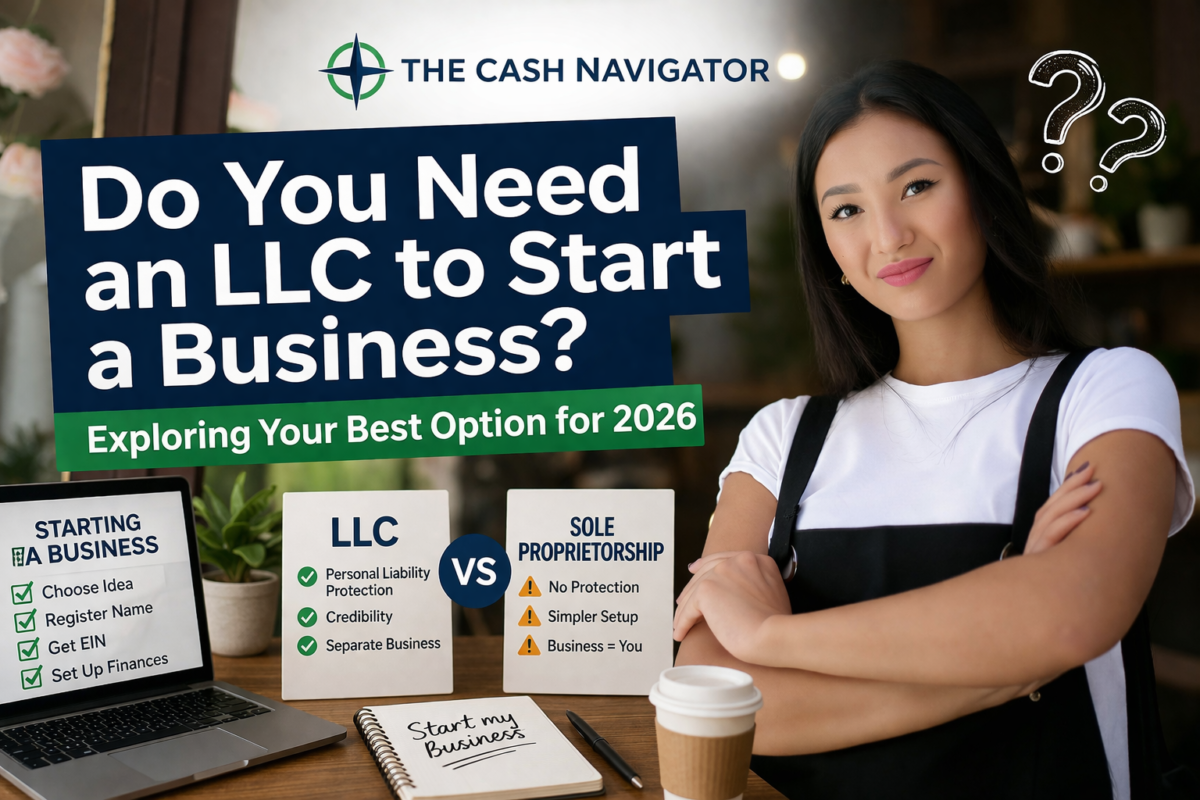
One of the most common questions new entrepreneurs ask is: "Do I need an LLC before I can start?" The short answer: no. But the longer answer depends on your risk level, income, and goals. Here's how to think through it clearly.
What is an LLC?
An LLC (Limited Liability Company) is a business structure that separates your personal assets from your business liabilities. If your business gets sued or can't pay its debts, your personal savings, home, and car are generally protected.
LLCs also offer tax flexibility. By default, a single-member LLC is taxed as a sole proprietor (income flows to your personal return). You can also elect to be taxed as an S-Corp, which can reduce self-employment taxes at higher income levels.
Starting as a sole proprietor
A sole proprietorship is the default business structure — you're in business the moment you start selling. No paperwork, no filing fees, no formation process.
The downside: there's no legal separation between you and your business. If someone sues your business, they're suing you personally.
For low-risk, low-revenue businesses just getting started, a sole proprietorship is perfectly fine. Many successful businesses operated as sole proprietors for years before forming an LLC.
When you actually need an LLC
Consider forming an LLC when:
- You have meaningful liability risk. You're working in clients' homes, handling their money, giving advice, or doing physical work.
- You're earning consistently. Once you're making $1,000+/month, the cost of an LLC is trivial relative to the protection.
- You want to open a business bank account. Many banks require an LLC or EIN for a business account.
- You're working with clients who require it. Some corporate clients won't contract with sole proprietors.
- You want credibility. "LLC" after your business name signals legitimacy to some customers.
How to form an LLC
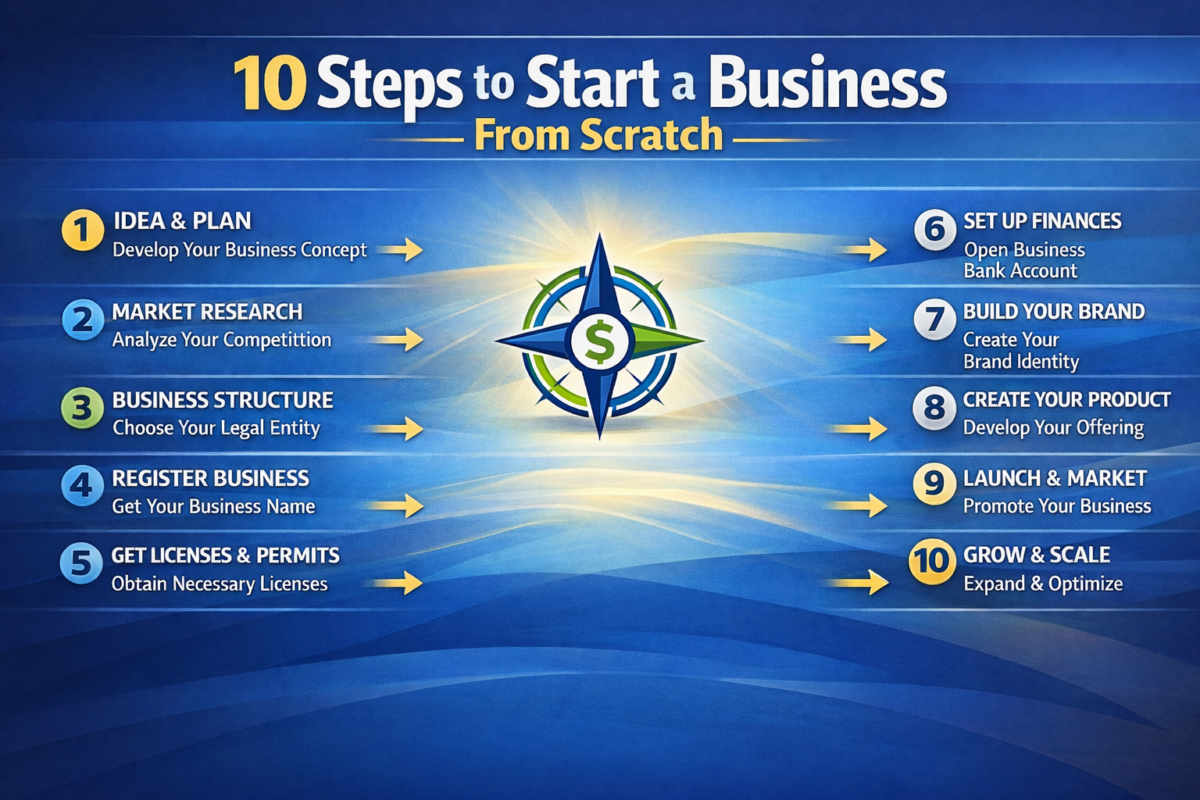
- Choose a state (usually your home state).
- Pick a business name and check availability with your state's Secretary of State.
- File Articles of Organization with your state (online, usually).
- Get an EIN (Employer Identification Number) from the IRS — free at IRS.gov.
- Open a dedicated business bank account.
- Create an operating agreement (required in some states, recommended in all).
What it costs
State filing fees range from $50 (Kentucky) to $500 (Massachusetts). Most states are $50–$150. Some states also charge annual fees or franchise taxes to maintain the LLC.
You can file yourself (no lawyer needed for a simple single-member LLC) or use a service like LegalZoom for $0–$300 plus state fees.
FAQ
Can I start selling before I have an LLC?
Yes. You're operating as a sole proprietor. Just keep records, report income on your taxes, and form the LLC when it makes sense.
Does an LLC protect me from everything?
No. An LLC doesn't protect you from personal guarantees, fraud, or "piercing the corporate veil" (mixing personal and business finances). Keep them separate.
What about an S-Corp?
An S-Corp election can save on self-employment taxes once you're earning $50,000+/year in profit. Talk to a CPA before making that election.