










The 2026 Entrepreneurial Landscape and the Fundamental Question
In the current financial environment, the barrier to entry for starting a business has never been lower, yet the complexity of maintaining long-term sustainability has arguably never been higher. As individuals navigate the digital economy, a primary concern for every founder is the legal architecture of their venture. The question, “Do you need an LLC to start a business?” is often the first significant hurdle. While many high-growth entrepreneurs begin with nothing more than a laptop and an idea, the structural decisions made in the early stages dictate the trajectory of asset protection, tax efficiency, and market credibility.
Do You Need an LLC to Start a Business? The Ultimate 2026 Entrepreneurial Guide

The 2026 Entrepreneurial Landscape and the Fundamental Question
In the current financial environment, the barrier to entry for starting a business has never been lower, yet the complexity of maintaining long-term sustainability has arguably never been higher. As individuals navigate the digital economy, a primary concern for every founder is the legal architecture of their venture. The question, “Do you need an LLC to start a business?” is often the first significant hurdle. While many high-growth entrepreneurs begin with nothing more than a laptop and an idea, the structural decisions made in the early stages dictate the trajectory of asset protection, tax efficiency, and market credibility.
The 2026 landscape is uniquely defined by the full implementation of the One Big Beautiful Bill Act (OBBBA), a landmark piece of federal legislation that has permanently altered the tax code for small businesses and self-employed individuals. Navigating these changes requires a strategic approach to entity selection. If you want a deep dive into the legal distinctions, you can explore which one is best for your business—an LLC or Sole Proprietorship, or consult the comprehensive guide on choosing a business structure by The Hartford Insurance.
The Evolution of a Billion-Dollar Venture: A Case Study in Structural Transitions
The journey of a successful enterprise often begins in the most humble of structures. It is a common narrative among the world’s most successful marketers to start as a simple sole proprietor. Operating as a sole proprietor allows a founder to transact business immediately without the need for state registration or complex administrative filings. During this phase, the business and the individual are legally indistinguishable.
However, as success compounds, the “simplicity” of the sole proprietorship transforms into a significant strategic risk. For a founder who eventually reached the billion-dollar milestone, the first major pivot occurred when they moved from a sole proprietorship to a Limited Liability Partnership (LLP). As the primary partner branched off into a new venture, the structure was converted into a Limited Liability Company (LLC). This progression illustrates that while the answer to “Do you need an LLC to start a business?” might be “no” on day one, it becomes an emphatic “yes” the moment the venture has something worth losing. For those nearing this pivot, learning how to change a sole proprietorship to an LLC is your next critical step.
Decoding the Core Structures: Sole Proprietorship vs. LLC vs. LLP
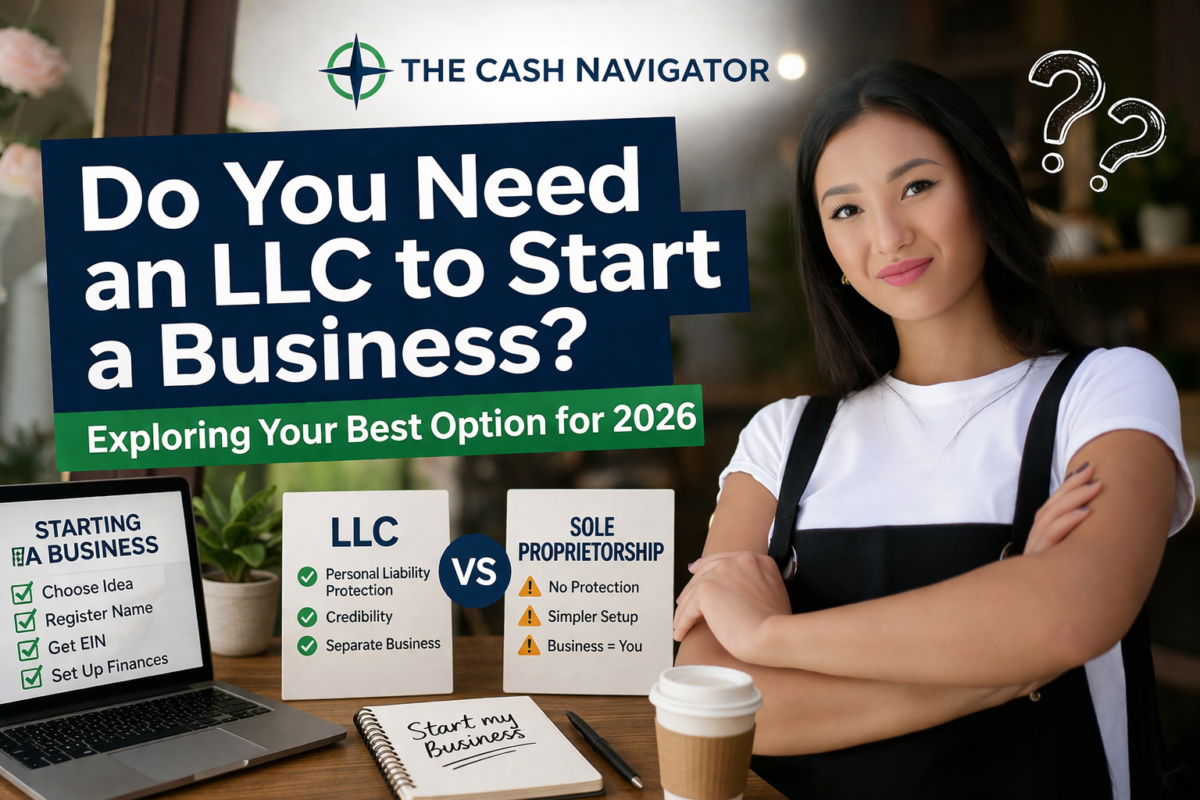
To make an informed decision, a founder must dissect the three most common structures utilized in the 2026 economy. If you are researching how to choose between an LLC vs. Sole Proprietorship, here is how each impacts your liability and tax profile:
The Sole Proprietorship: The Default Gateway
A sole proprietorship is an unincorporated business owned and run by one individual. In the context of “Do you need an LLC to start a business?”, the answer is legally no, because the IRS recognizes you as a business the moment you start working for profit. For further clarity, you can read New York Life’s insights on Sole Proprietorship vs Limited Liability Corporations or check out what small business owners should know from Block Advisors.
- Legal Distinction: None; the owner is the business.
- Asset Protection: Zero; personal home, cars, and savings are at risk.
- Tax Filing: Schedule C on personal Form 1040.
- Setup Cost: $0 in most jurisdictions.
The Limited Liability Company (LLC): The Modern Standard
The LLC is a hybrid structure that provides the limited liability features of a corporation and the tax efficiencies of a partnership. It creates a “corporate veil” that protects members from being personally liable for company debts. Before filing, reviewing a detailed explanation of the key differences in 2026 can save you thousands in legal fees. If you’re ready to take the leap, the US Chamber of Commerce guide on how to start an LLC is an excellent roadmap.
Asset Protection and the Legal Reality of the Corporate Veil
The primary reason the question “Do you need an LLC to start a business?” persists is the concept of liability. To maintain this shield, owners must avoid “piercing the corporate veil” by avoiding the commingling of funds and using formal Operating Agreements. Also, if you plan to operate under a different name, understanding what a DBA stands for and how it differs from an LLC is crucial for compliance.
The 2026 Tax Revolution: The One Big Beautiful Bill Act (OBBBA)
One cannot discuss business structures without addressing the OBBBA. This legislation has permanently extended several business-friendly provisions. For self-employed individuals, understanding how the One Big Beautiful Bill impacts self-employed workers is vital for maximizing returns.
Permanent Qualified Business Income (QBI) Deduction
One of the most significant wins for LLCs and sole proprietors is the permanent status of the 20% QBI deduction, effectively lowering your top tax rate. To fully capitalize on this, reviewing the Top 10 Tax Planning Strategies for 2026 by BDO USA is highly recommended.
2026 Tax Thresholds and Rates
The 2026 tax year also brings updated thresholds for self-employment and payroll taxes. Staying updated on everything you need to know about small business tax changes ensures you aren’t caught off guard. For official guidelines, the IRS Tax Guide for Small Business (Publication 334) and the Employer’s Tax Guide (Publication 15) are your definitive sources.
| Tax Metric | 2026 Value |
|---|---|
| Social Security Wage Base | $184,500 |
| Self-Employment Tax Rate | 15.3% (12.4% SS + 2.9% Medicare) |
| 1099-NEC/MISC Threshold | $2,000 |
| 1099-K Reporting Threshold | $20,000 and 200 transactions |
If you’re unsure which entity offers the best shelter, attorneys at Thienel Law break down what the best business structure is for taxes. You can also utilize our internal financial calculators at The Cash Navigator to project your potential savings.
Strategic Tax Elections: S-Corp vs. C-Corp for the Growing LLC
A default single-member LLC is taxed like a sole proprietorship. However, an LLC can elect to be taxed as an S-Corporation once it reaches a certain level of profitability. If you are comparing Sole Proprietorship vs LLC vs S Corp differences in 2026, the S-Corp election is generally where the magic happens for self-employment tax savings.
Digital Infrastructure: Domains, Hosting, and Credibility
Starting a business in 2026 requires a digital “headquarters.” A formal LLC name on a domain-based email address carries significantly more weight than a generic Gmail account. Securing a domain is the first step in creating a complete and professional website.
- Trust Factor: 83% of small businesses say domain-based email helped them look more professional. Learn how to set up a professional email address with GoDaddy.
- Response Rates: Businesses using professional business email accounts see a 30% higher response rate.
For high-speed performance, utilizing lightning-fast web hosting with one-click setup ensures your site meets Google’s core web vitals. Before buying, you might want to read a 2026 GoDaddy review to understand the reality behind their hosting. Furthermore, managing your operations through Microsoft Office 365 to boost productivity virtually anywhere is a game-changer. Discover the benefits of using M365 Business Professional for your business needs.
Securing Capital: SBA Loans and Business Credit Strategies
For those asking, “Do you need an LLC to start a business?”, the ability to borrow money is a major factor. The SBA offers several programs tailored to help registered entities. You can find their official documentation on how to register your business with the U.S. Small Business Administration, or read the comprehensive SBA Small Business Resource Guide for 2025-2026 to understand your funding options.
Conclusion: Making the Strategic Choice
In 2026, the question “Do you need an LLC to start a business?” is answered by your level of ambition. If you are starting a low-risk side hustle, the sole proprietorship is a fine starting point. However, to truly build wealth, the transition to an LLC is a mandatory strategic move. Dive deeper into tax optimization by reading which is better for tax savings between an LLC and a Sole Proprietor, or explore the Boyer Law Firm’s 2026 guide to choosing the right structure.
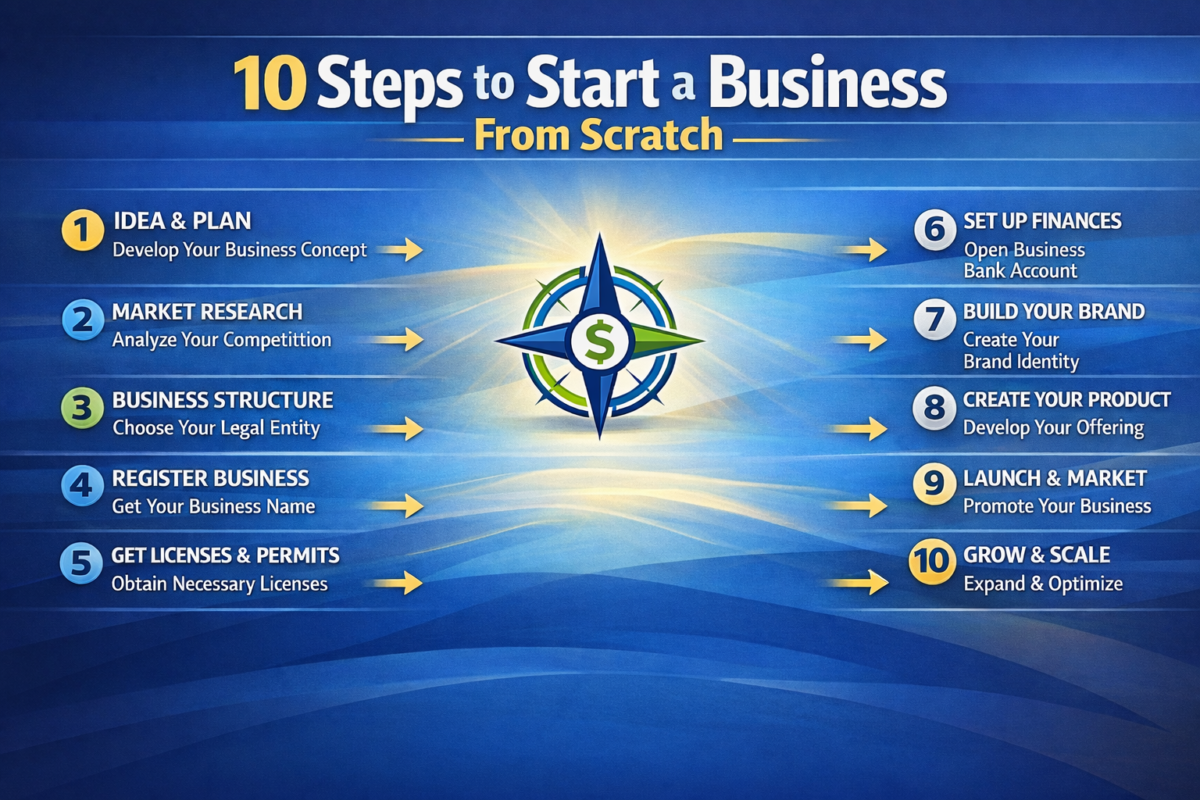
For a step-by-step breakdown on getting your venture off the ground, check out this simplified guide on how to start a small business in 2026, or explore the full SBA guide on business structures.
Next Step: Want to see exactly how much you could save in taxes by switching from a Sole Proprietorship to an S-Corp this year? Check out our Tax Savings Calculators to run your own custom numbers right now!
The Evolution of a Billion-Dollar Venture: A Case Study in Structural Transitions
The journey of a successful enterprise often begins in the most humble of structures. It is a common narrative among the world’s most successful marketers to start as a simple sole proprietor. Operating as a sole proprietor allows a founder to transact business immediately without the need for state registration or complex administrative filings. During this phase, the business and the individual are legally indistinguishable.
However, as success compounds, the “simplicity” of the sole proprietorship transforms into a significant strategic risk. For a founder who eventually reached the billion-dollar milestone, the first major pivot occurred when they moved from a sole proprietorship to a Limited Liability Partnership (LLP). As the primary partner branched off into a new venture, the structure was converted into a Limited Liability Company (LLC). This progression illustrates that while the answer to “Do you need an LLC to start a business?” might be “no” on day one, it becomes an emphatic “yes” the moment the venture has something worth losing. For those nearing this pivot, learning how to change a sole proprietorship to an LLC is your next critical step.
Decoding the Core Structures: Sole Proprietorship vs. LLC vs. LLP
To make an informed decision, a founder must dissect the three most common structures utilized in the 2026 economy. If you are researching how to choose between an LLC vs. Sole Proprietorship, here is how each impacts your liability and tax profile:
The Sole Proprietorship: The Default Gateway
A sole proprietorship is an unincorporated business owned and run by one individual. In the context of “Do you need an LLC to start a business?”, the answer is legally no, because the IRS recognizes you as a business the moment you start working for profit. For further clarity, you can read New York Life’s insights on Sole Proprietorship vs Limited Liability Corporations or check out what small business owners should know from Block Advisors.
- Legal Distinction: None; the owner is the business.
- Asset Protection: Zero; personal home, cars, and savings are at risk.
- Tax Filing: Schedule C on personal Form 1040.
- Setup Cost: $0 in most jurisdictions.
The Limited Liability Company (LLC): The Modern Standard
The LLC is a hybrid structure that provides the limited liability features of a corporation and the tax efficiencies

