










How to start a business from scratch is one of the most important money questions you can ask yourself right now. In a world where job security can shift quickly, costs keep rising, and more people want control over their income, building a real business is no longer just a dream. For many people, it is a financial strategy.
But let’s be clear from the start: starting a business from scratch is not about printing business cards, filing an LLC, and hoping customers appear. It is about choosing a workable offer, validating demand, protecting yourself legally, organizing your money correctly, and building something that can survive the real world.
If you do this the right way, your business can become more than a side project. It can become an asset. It can create extra income, long-term upside, and eventually stronger financial independence than relying on one paycheck alone.
This guide will walk you through how to start a business from scratch in a practical order. We will cover the idea stage, the money stage, the paperwork stage, and the early credibility stage so you know what matters first and what can wait.
If you are still trying to stabilize your personal finances before launching, these guides may help first: The 50/30/20 Budget Rule Explained, How Much Emergency Fund Should You Have?, and How to Save Money Fast When You’re Broke.
Table of Contents
- What starting a business from scratch really means
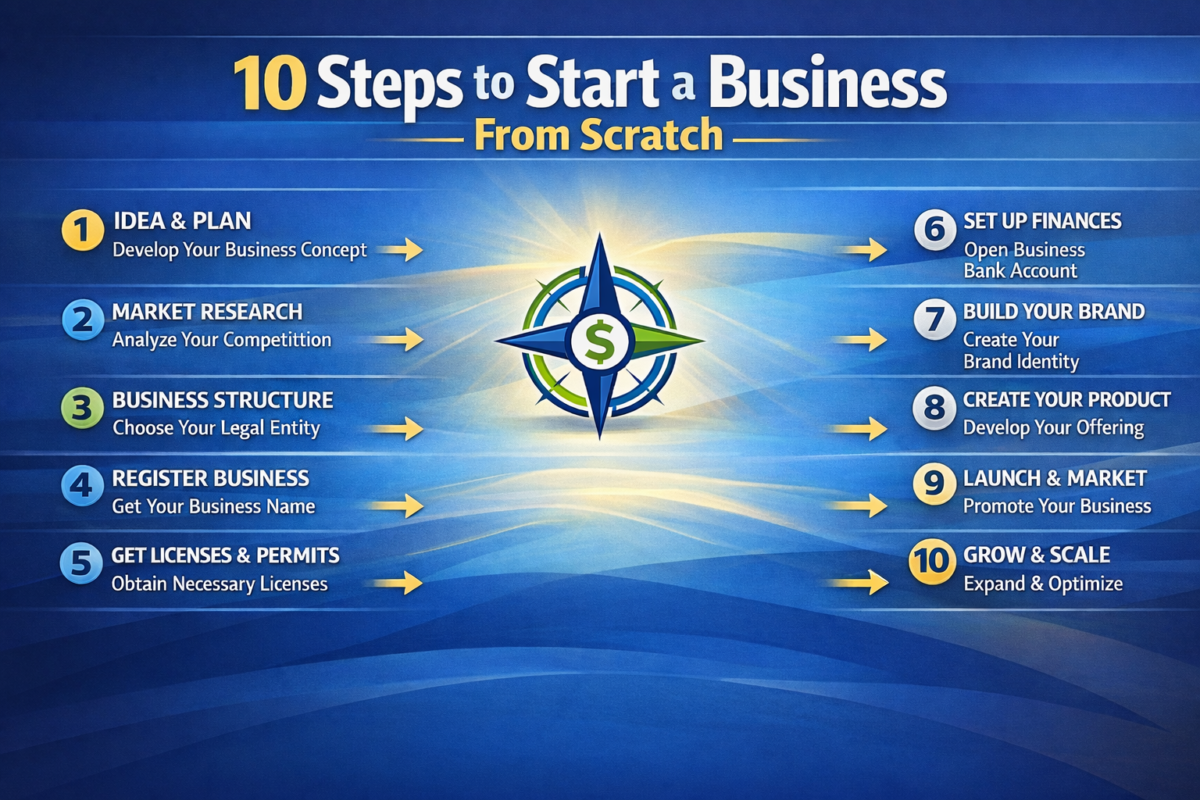
- Step 1: Choose a business idea with real demand
- Step 2: Validate the idea before spending heavily
- Step 3: Decide how your business will make money
- Step 4: Estimate startup costs and build a simple budget
- Step 5: Choose the right business structure
- Step 6: Register your business and handle core paperwork
- Step 7: Get an EIN and open a business bank account
- Step 8: Set up bookkeeping, taxes, licenses, and protection
- Step 9: Build a lean marketing system before you “go big”
- Step 10: Build credibility, vendor relationships, and future business credit
- Common mistakes new owners make
- FAQ
- Bottom line
What starting a business from scratch really means
When people ask how to start a business from scratch, they often think the first move is legal paperwork. It usually is not.
The first real move is deciding what problem you solve, who you solve it for, and why someone would pay you instead of ignoring you. The U.S. Small Business Administration’s launch guidance and the IRS startup checklist both make it clear that starting a business involves more than a name and a form. You need structure, registration, tax setup, and operating discipline from the beginning. That is why this guide follows the actual sequence that matters in real life.
A business started from scratch usually moves through these phases:
- idea and market fit
- pricing and revenue model
- budget and startup cost planning
- legal structure and registration
- tax ID and banking
- licenses, compliance, and recordkeeping
- customer acquisition and credibility
If you skip the early thinking and rush into filing, you can end up with an official company that still has no customers. That is backwards.
Step 1: Choose a business idea with real demand
The first step in how to start a business from scratch is choosing an idea people will actually pay for.
That sounds obvious, but this is where many new founders go wrong. They choose based on excitement alone, not demand. A better approach is to start at the intersection of four things:
- something you can do well
- something people already spend money on
- something you can explain clearly in one sentence
- something you can launch without catastrophic overhead
Good first-business categories often include service businesses, local businesses, digital services, consulting, niche e-commerce, repair, cleaning, content-led businesses, and operational support for other small companies.
If you need startup cash before launching, it can help to create extra income first. Read Side Hustles That Actually Make Money and How to Save Money on a Low Income so you can build a small runway instead of forcing every first move onto a credit card.
Step 2: Validate the idea before spending heavily
If you want to know how to start a business from scratch without wasting money, this step matters more than most people realize.
Validation means checking whether real customers respond before you sink time and cash into logos, office space, expensive software, or a polished website. Your goal is not perfection. Your goal is proof.
Useful ways to validate include:
- asking potential customers about their current problem and what they already pay for
- offering a simple beta version of your service
- creating a basic landing page and measuring signups or inquiries
- testing pricing with real conversations
- studying competitors to see how they position, package, and sell
Do not ask friends if your idea is “cool.” Ask whether they would pay, how much, how soon, and what would make them hesitate.
A simple rule: if no one wants the offer in a stripped-down form, adding paperwork will not fix it.
Step 3: Decide how your business will make money
Many people researching how to start a business from scratch spend too much time on the brand and not enough time on the revenue model.
You need to know exactly how money enters the business. Will you charge one-time fees, monthly retainers, subscriptions, hourly rates, project rates, product margins, licensing fees, or some mix?
Write down the answers to these questions:
- What do I sell?
- Who buys it?
- What problem does it solve?
- How much do I charge?
- How often can a customer buy from me?
- What does it cost me to deliver?
If you cannot explain how revenue works in plain English, the model is still too fuzzy.
This is also where you decide whether the business is meant to create cash flow, long-term equity, personal flexibility, or eventually leverage through staff and systems. All four are valid. Just be honest about which one you are building.
Step 4: Estimate startup costs and build a simple budget
You do not need a giant financial model to learn how to start a business from scratch. But you do need a realistic startup budget.
The SBA’s launch resources make clear that startups should think through formation costs, licenses, tools, equipment, location costs, insurance, and operating expenses before launching. Your list may include:
- formation and filing fees
- domain name and website
- software subscriptions
- equipment or inventory
- insurance
- licenses or permits
- banking and payment processing fees
- basic marketing costs
- working capital for the first 3 to 6 months
Keep the first budget simple:
- One-time startup costs
- Monthly fixed costs
- Monthly variable costs
- Minimum monthly revenue needed to survive
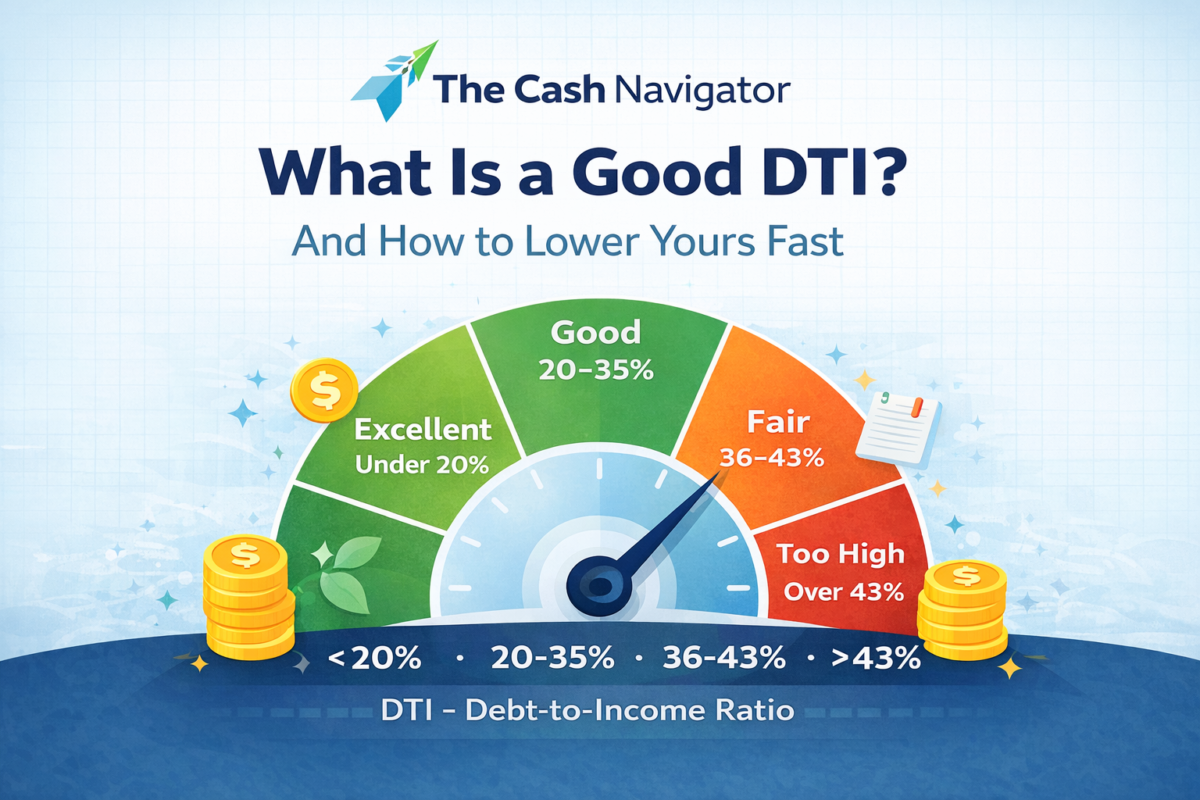
If your personal finances are already stretched, do not ignore that. Starting a business while carrying unstable debt or no cash cushion can put pressure on every decision. Before you launch, check your own numbers with the Debt-to-Income Ratio Calculator and read What Is a Good DTI?. If personal debt is eating your flexibility, read How to Get Out of Debt Fast and tighten the base first.
Step 5: Choose the right business structure
This is the point where how to start a business from scratch becomes a legal and tax question.
According to the SBA, the business structure you choose affects taxes, day-to-day operations, and how much of your personal assets are at risk. Common structures include sole proprietorships, partnerships, LLCs, corporations, and S corporation tax elections layered onto eligible entities.
For many first-time owners, the most common early comparison is:
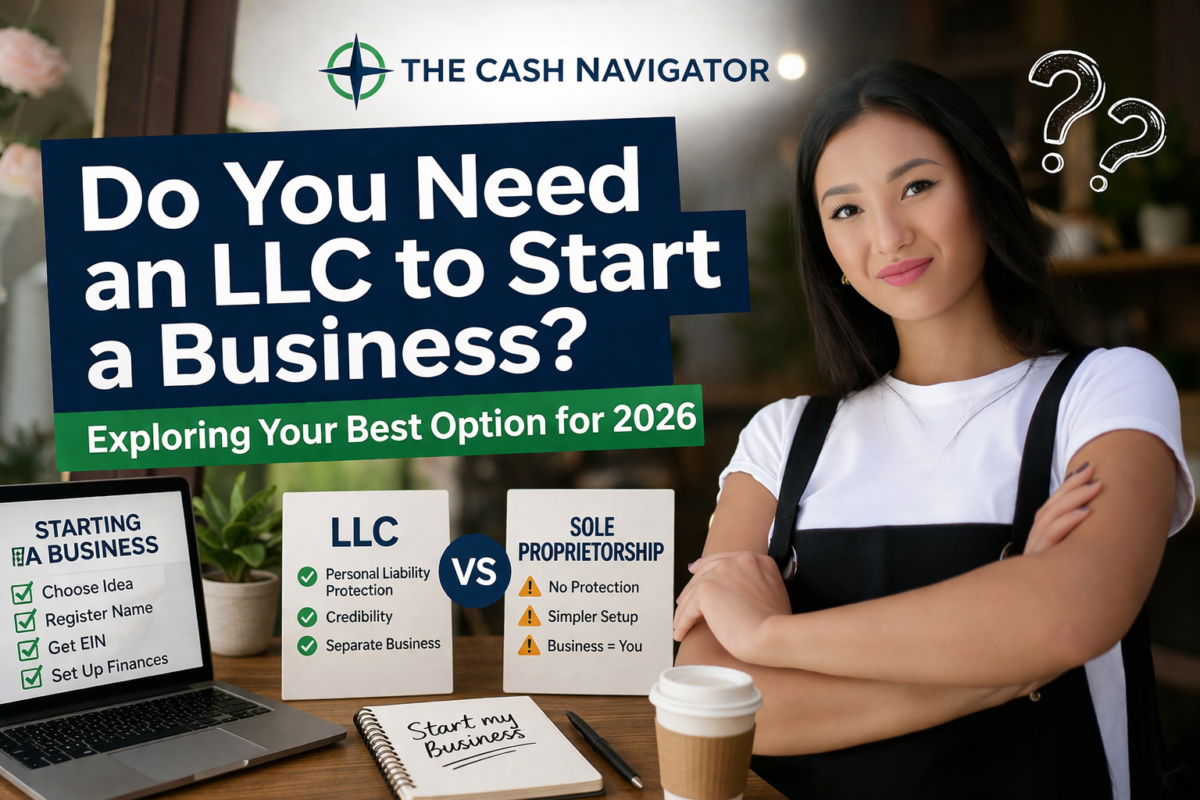
- Sole proprietorship: easiest to start, but generally no separate legal entity shield
- LLC: usually cleaner for liability separation and credibility, with flexible tax treatment
That does not mean everyone must form an LLC on day one. But if you are signing contracts, taking payments seriously, or exposing yourself to customer risk, an LLC is often worth considering early.
At minimum, make this decision intentionally. Do not just copy what someone on social media said.
Primary references: SBA business structure guide and IRS startup checklist.
Step 6: Register your business and handle core paperwork
Once the structure is chosen, the next part of how to start a business from scratch is registration.
At this stage, you may need to:
- choose and clear a business name
- register your entity with your state
- file a DBA if needed
- apply for any required state or local licenses and permits
- review whether your city, county, or profession has additional rules
The SBA’s launch section on registration and permits is a good baseline because requirements vary by industry and location. A cleaning business, trucking business, online store, and home-based consulting business can all have different compliance needs.
Use these official references: Register your business and Apply for licenses and permits.
Do not assume a domain purchase or an Instagram handle means your business is “set up.” It is not.
Step 7: Get an EIN and open a business bank account
If you are serious about how to start a business from scratch, this is one of the most important separation points.
The IRS says an EIN is a federal tax ID number for businesses and that you can get one directly from the IRS for free in minutes. Not every sole proprietor is legally required to have one immediately, but many business owners still get one because it helps separate business paperwork from a personal Social Security number and is often needed for banking, payments, payroll, and tax administration.
Use: Get an EIN from the IRS.
Once you have the right formation documents and tax ID setup, open a separate business bank account. The SBA notes that banks typically ask for formation documents, identification, ownership information, and your EIN or other tax documentation depending on the business type.
Use: Open a business bank account.
This is not busywork. Mixing personal and business money is one of the fastest ways to create tax confusion, weak recordkeeping, and unnecessary stress.
Step 8: Set up bookkeeping, taxes, licenses, and protection
One of the biggest differences between a hobby and a real company is operational discipline. If you want to master how to start a business from scratch, learn this early: what you track determines what you can improve.
Set up a simple system for:
- income tracking
- expense tracking
- receipts and documentation
- estimated taxes if applicable
- sales tax responsibilities if applicable
- invoice and payment records
- contract and client record storage
The IRS small business and self-employed resources are a strong starting point for tax basics, and the SBA launch guide is useful for insurance and compliance planning.
This is also where you should think about risk. Depending on your type of business, insurance may not be optional in practical terms. And depending on your industry, compliance mistakes can cost more than a good bookkeeping system ever will.
One more modern reality: new businesses are common scam targets. The FTC warns that scammers often impersonate government agencies, utilities, compliance vendors, or official registries to pressure businesses into fake payments or unnecessary services. Keep these references handy: FTC small-business scam guide and ReportFraud.ftc.gov.
Step 9: Build a lean marketing system before you “go big”
A lot of people think how to start a business from scratch means “how do I launch a huge brand?” Usually, that is the wrong question.
The better question is: how do I get my first customers predictably?
Your early marketing system can be simple:
- a clear offer
- a basic website or landing page
- a business email
- a strong headline explaining the value you deliver
- a way to collect leads or inquiries
- a simple follow-up process
- a repeatable way to ask for referrals or reviews
In the early months, clarity beats complexity. You do not need a giant funnel. You need a believable offer, a specific audience, and consistent outreach.
If money is tight, avoid vanity spending here. A polished brand that nobody sees is still invisible.
Step 10: Build credibility, vendor relationships, and future business credit
The final step in how to start a business from scratch is thinking beyond launch.
You are not just trying to start. You are trying to become financeable, credible, and easier to grow.
That means gradually building:
- clean business records
- separate banking history
- consistent revenue
- vendor relationships
- professional contact information
- basic digital presence and trust signals
As you grow, you may eventually explore Net 30 vendors, business credit files, and trade reporting. If you later move into federal-award registration, note one important detail: the federal government no longer uses DUNS as the authoritative identifier in SAM.gov. GSA states that the federal system now uses the Unique Entity ID created in SAM.gov. If you only need a federal identifier, use official government guidance rather than outdated blog posts.
That detail matters because many new owners get pulled into confusing or outdated advice when they start looking into credibility and credit-building.
Common mistakes new owners make
Here are the most common ways people sabotage themselves while learning how to start a business from scratch:
1. Filing first and thinking later
Legal setup matters, but it should support a real business model, not replace one.
2. Mixing business and personal money
This creates confusion in bookkeeping, taxes, and decision-making.
3. Underestimating startup runway
It usually takes longer to get traction than people expect.
4. Buying too many tools too early
Keep the stack lean until revenue justifies complexity.
5. Ignoring taxes and compliance
What you avoid early can become expensive later.
6. Falling for scammy shortcuts
Be cautious of paid “official” listings, fake compliance invoices, and expensive coaching offers promising overnight success.
7. Forgetting personal financial stability
If the business has to succeed instantly because your personal cash flow is fragile, that pressure can force bad decisions. Strengthen your base where needed with resources like How to Save $5,000 in One Year and How to Use Your Tax Refund Wisely in 2026.
FAQ: How to start a business from scratch
Do I need an LLC to start a business from scratch?
No, not always. Some people begin as sole proprietors. But if you want cleaner separation, stronger credibility, and a more formal structure, an LLC is often worth reviewing early.
How much money do I need to start a business from scratch?
It depends on the model. A service business may start with very little. Inventory-heavy or equipment-heavy businesses can require much more. The right question is not just “how much does filing cost?” but “how much runway do I need to operate without panicking?”
Should I get an EIN even if I do not have employees?
In many cases, yes, it can still make sense. The IRS provides EINs for free, and they are often useful for banking and business administration even when not strictly required on day one.
What should I do first: open the bank account or form the business?
Usually you choose the structure and complete the basic formation steps first, then get your EIN if needed, then open the business bank account with the supporting documents.
Is now a bad time to start a business?
Not necessarily. Economic pressure can make weak businesses harder to sustain, but it also creates demand for practical, lower-cost, problem-solving businesses. The U.S. Census Bureau’s Business Formation Statistics continue to track substantial business application activity, which is a reminder that people are still launching despite uncertainty.
Bottom line
How to start a business from scratch is not really a mystery. The sequence is what matters.
Choose a real problem. Validate demand. Build a simple revenue model. Estimate costs. Choose the right structure. Register correctly. Get your EIN and banking set up. Track your money. Stay compliant. Then focus on getting customers and building credibility.
That is how real businesses start.
You do not need to do everything at once. You do need to do the right things in the right order.
If you want a business to improve your financial life rather than complicate it, start lean, stay organized, and build on a solid foundation from day one.
External sources used in this guide:
- SBA: 10 Steps to Start Your Business
- SBA: Launch Your Business
- SBA: Choose a Business Structure
- SBA: Register Your Business
- SBA: Apply for Licenses and Permits
- SBA: Open a Business Bank Account
- IRS: Checklist for Starting a Business
- IRS: Get an EIN
- FTC: Scams and Your Small Business
- FTC: Report Fraud
- GSA: Unique Entity ID Update
- U.S. Census Bureau: Business Formation Statistics

