
























If you are applying for a mortgage, refinancing, or just trying to improve your financial health, one question matters more than most people realize: what is a good DTI?
Your debt-to-income ratio, or DTI, is one of the clearest ways lenders measure affordability. The Consumer Financial Protection Bureau says DTI is your total monthly debt payments divided by your gross monthly income. In plain English, it shows how much of your monthly income is already committed to debt before you take on anything new.
That matters even more in today’s economy. U.S. consumer prices were up 2.4% year over year in February 2026, and Freddie Mac reported the average 30-year fixed mortgage rate at 6.00% on March 5, 2026. When borrowing costs stay elevated, a weak DTI can shut the door on better loan terms fast.
So, what is a good DTI? For most borrowers, 36% or lower is a strong target, 43% is often an important upper threshold for qualified mortgages, and some conventional loans can still be approved above that depending on underwriting, reserves, and credit quality. Fannie Mae says manually underwritten loans generally cap at 36%, can stretch to 45% with compensating factors, and Desktop Underwriter casefiles can go as high as 50%.
The good news is that DTI can improve faster than many people think. If you know which debts matter, how lenders calculate the number, and which moves lower it fastest, you can make meaningful progress in a matter of months.
What Is Debt-to-Income Ratio?
Before answering what is a good DTI?, you need to know what goes into it.
According to the CFPB, your DTI is calculated by adding up your monthly debt payments and dividing that total by your gross monthly income. Gross income means income before taxes and deductions.
A basic formula looks like this:
DTI = Total Monthly Debt Payments ÷ Gross Monthly Income × 100
For example:
- Mortgage or rent-related debt payment counted by lender: $1,500
- Car loan: $400
- Student loan: $250
- Credit card minimums: $150
Total monthly debt = $2,300
If your gross monthly income is $6,000, your DTI is:
$2,300 ÷ $6,000 = 38.3%
That would put you in a range where approval is still possible, but your file may get more scrutiny.
What Counts in Your DTI?
If you are wondering what is a good DTI?, it helps to understand what lenders usually include.
Most lenders count recurring monthly obligations such as:
- Mortgage payment
- Property taxes and homeowners insurance if part of housing payment
- Car loans
- Student loans
- Personal loans
- Credit card minimum payments
- Alimony or child support in many cases
They generally do not count things like groceries, utilities, gas, or entertainment spending in the DTI formula itself. The ratio is designed to measure contractual debt obligations, not your total budget. The CFPB and Fannie Mae both frame DTI around recurring debt obligations relative to qualifying income.
That means someone can have a technically “acceptable” DTI and still feel financially stretched if rent, childcare, and insurance costs are high. This is one reason DTI is important, but not perfect.
What Is a Good DTI?
Here is the practical answer.
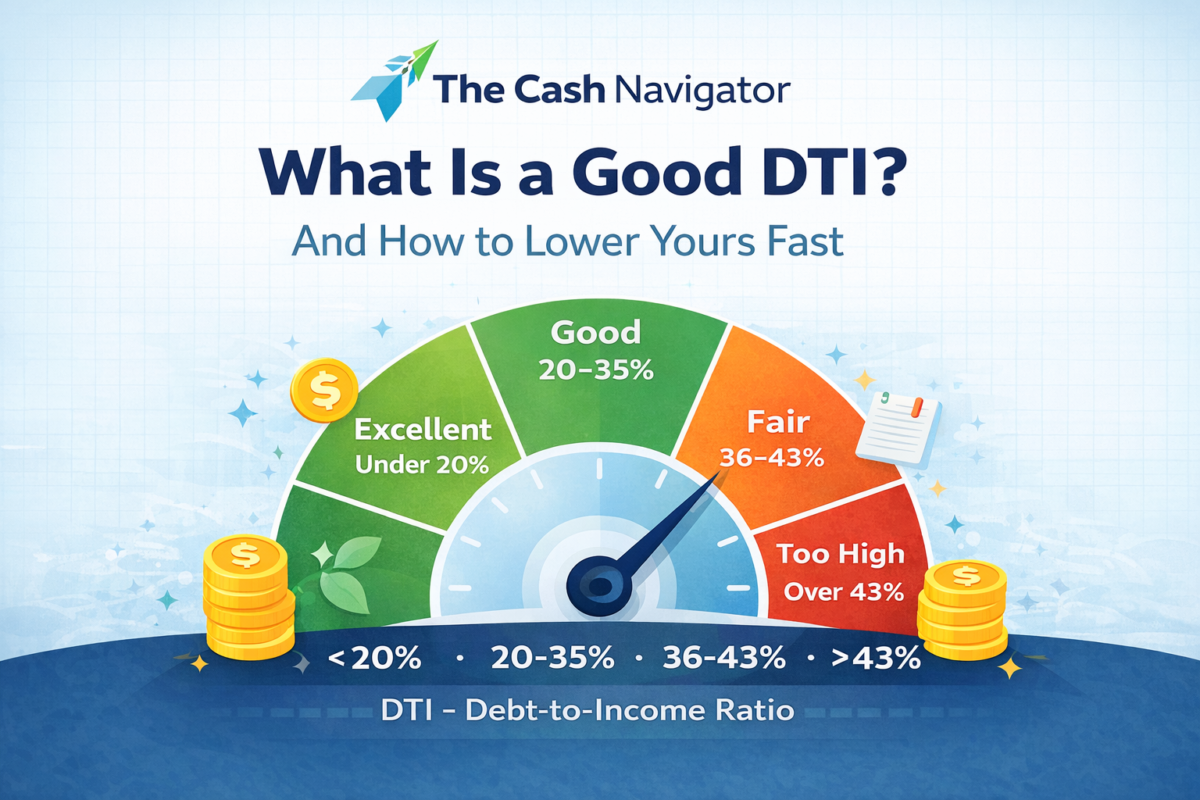
If you are asking what is a good DTI?, these are the ranges that matter most:
Under 20%: Excellent
A DTI under 20% usually signals a very manageable debt load. It gives you breathing room, flexibility, and a stronger cushion for emergencies.
20% to 35%: Good
This is still a healthy range for most people. Lenders often view borrowers here as lower risk, especially if credit scores and cash reserves are solid.
36% to 43%: Acceptable but Watch It
This is where things get tighter. A DTI in this zone can still work, but lenders may look more closely at credit score, down payment, reserves, and job stability.
Above 43%: Riskier
The CFPB’s older qualified mortgage framework highlighted 43% as an important affordability line, and that number still matters in how many borrowers and lenders think about risk.
45% to 50%: Possible in Some Cases
Fannie Mae allows some files above 43%, and even up to 50% through automated underwriting in certain situations. But higher DTI usually means less margin for error and sometimes worse loan terms.
So if you want the shortest answer to what is a good DTI?, use this:
A good DTI is generally 36% or lower.
Why DTI Matters More Right Now
DTI always matters, but it matters even more when affordability is under pressure.
Freddie Mac reported a 6.00% average 30-year fixed mortgage rate in early March 2026. Even though that is below the 2025 highs, it is still much more expensive than the ultra-low-rate era many buyers remember. Higher rates push monthly payments up, which pushes DTI up too.
At the same time, the Federal Reserve’s household debt service ratio release shows required household debt payments were 11.12% of disposable personal income in 2025:Q2. That is well below the 2007 peak, but it has drifted higher than the unusually easy pandemic-era period.
In other words, borrowers are not in crisis territory nationally, but affordability is tighter than it felt a few years ago. That is exactly why what is a good DTI? has become such an important question again.
Front-End vs. Back-End DTI
When people ask what is a good DTI?, they are usually talking about back-end DTI.
That is the version that includes:
- housing payment
- car loans
- credit cards
- student loans
- other recurring debts
Some mortgage underwriting also looks at front-end DTI, which focuses on housing costs alone. The old 28/36 framework is still widely used as a rule of thumb:
- 28% or less for housing
- 36% or less for total debt
That is not a universal law, but it remains a useful benchmark when you are trying to stay financially comfortable.
A Real-World DTI Example
Let’s make this practical.
Assume you earn $7,000 gross per month.
Your debts are:
- Proposed mortgage, taxes, insurance: $2,100
- Car loan: $450
- Student loan: $300
- Credit card minimums: $150
Total debt payments = $3,000
DTI = $3,000 ÷ $7,000 = 42.9%
That is right near the 43% line many borrowers hear about. In that situation, your application may still get approved, but you are unlikely to have much monthly flexibility. A small rise in insurance, HOA dues, or credit card minimums could make the file less attractive.
This is why the answer to what is a good DTI? is not just “what can get approved?” It is also “what gives you room to live?”
How to Lower Your DTI Fast
This is where the article becomes actionable.
If you want to improve your odds of approval or simply reduce stress, here are the fastest ways to lower DTI.
1. Pay Off Small Minimum-Payment Debts First
DTI is driven by monthly payments, not total balances alone.
That means knocking out a credit card with a $75 minimum payment can sometimes help your DTI more immediately than slowly chipping away at a large loan balance.
Fastest targets:
- small credit card balances
- personal loans with fixed monthly payments
- buy-now-pay-later obligations if counted in underwriting
2. Refinance or Restructure Existing Debt
If you can reduce a monthly car payment, personal loan payment, or student loan payment, your DTI improves immediately.
Be careful, though. Stretching debt out too long can lower the payment while increasing total interest paid. DTI improvement is helpful, but not every payment reduction is financially smart.
3. Increase Gross Income
Because DTI uses gross income, extra verifiable income can help quickly.
Examples:
- overtime
- second job
- freelance income
- bonus income if lender will count it
- documented self-employment income
If your debt stays the same and income rises, the ratio falls.
4. Avoid Taking On New Debt Before Applying
This one is obvious but constantly ignored.
If you are planning to apply for a mortgage or refinance, avoid:
- new car loans
- financing furniture
- opening personal loans
- running up cards before statements close
A single new payment can move DTI enough to change approval odds.
5. Pay Down Credit Cards Before the Statement Date
For mortgage underwriting, lenders usually care about the minimum payment, but lowering balances can still help if it reduces required payments and improves your broader credit profile.
6. Delay the Purchase Slightly if Needed
Sometimes the fastest way to lower DTI is not speed. It is waiting 60 to 120 days while paying off two or three obligations.
A short pause can materially improve:
- DTI
- credit score
- reserves
- approval odds
Which Move Lowers DTI the Fastest?
If your only goal is to lower DTI fast, use this priority order:
- Eliminate small debts with real monthly payments
- Avoid any new financing
- Raise verifiable income
- Refinance expensive installment debt if terms make sense
- Delay major borrowing until your ratios improve
That is the most efficient playbook.
Common DTI Mistakes
People asking what is a good DTI? often make the same errors.
Confusing DTI With Credit Score
DTI does not directly become part of your credit score. It is an underwriting metric, not a FICO factor. But the habits that lower DTI often help credit too.
Using Net Income Instead of Gross Income
Lenders almost always calculate DTI with gross monthly income, not take-home pay. CFPB’s definition uses gross income.
Forgetting the New Housing Payment
If you are buying a home, lenders do not just look at your current DTI. They look at the new projected payment too.
Ignoring the Quality of the Ratio
A 42% DTI with strong reserves and great credit is different from a 42% DTI with no savings and maxed-out cards.
FAQ
What is a good DTI for a mortgage?
A good DTI for a mortgage is generally 36% or lower. Some borrowers can still qualify above that, but lower is stronger. Fannie Mae’s guidance shows manually underwritten loans usually max at 36%, with some flexibility to 45%, and automated underwriting can allow up to 50% in certain files.
Is 40% DTI bad?
Not necessarily, but it is not ideal. A 40% DTI is often still workable, especially with a strong credit score and reserves, but it leaves less room in your budget and may limit your best loan options.
Is 50% DTI too high?
For many borrowers, yes. Some conventional files can still be approved at 50% through automated underwriting, but risk is much higher and affordability gets tight.
What is a good DTI if I rent?
CFPB-linked guidance commonly points renters toward keeping DTI lower than homeowners because rent is not included the same way a mortgage is in many simplified DTI discussions. A practical target is still to stay at or below the mid-30% range if possible.
Final Thoughts
So, what is a good DTI? The cleanest answer is this:
Aim for 36% or lower.
If you are near 43%, be cautious.
If you are above that, improving your ratio before taking on new debt is usually the smarter move.
DTI is not just a lender metric. It is a stress metric. A lower DTI usually means more flexibility, more savings capacity, and less financial pressure when life gets expensive.
If you want to lower yours fast use The Cash Navigator’s DTI Calculator, start with the debts that have the biggest monthly payment impact, avoid new financing, and increase verifiable income wherever possible. Small moves compound quickly.
You may also want to read:

