



















If you’re serious about building wealth, understanding the money habits of people who save 30% or more of their income is one of the fastest ways to level up your finances.
Most Americans save far less. According to the Federal Reserve, the average personal savings rate hovers around 3–5%, meaning high savers are operating at a completely different level.
The good news: these results aren’t based on income alone — they’re driven by repeatable habits.
In this guide, you’ll learn the exact money habits of people who save 30%, backed by real data and actionable strategies you can apply immediately.
Why Saving 30% Changes Everything
Saving 30% isn’t just about discipline — it’s about freedom and optionality.
According to Vanguard research:
👉 https://investor.vanguard.com
- Households saving 20%+ build wealth significantly faster
- Higher savings rates reduce reliance on market returns
- Savings rate matters more than income level
This aligns with what we covered in:
👉 [How to Save $5,000 in One Year]
👉 [The 30-Day Money Reset]
The pattern is clear:
High savers win because they control their cash flow.
Money Habits of People Who Save 30%
This is the core section your SEO needs 👇
1. They Pay Themselves First (Non-Negotiable)
One of the most important money habits of people who save 30% is automatic saving.
According to the Consumer Financial Protection Bureau:
👉 https://www.consumerfinance.gov
Automating savings increases consistency and success rates dramatically.
What they do:
- Set auto-transfers immediately after income hits
- Treat savings like a bill (not optional)
Example:
- $5,000 income → $1,500 saved automatically
Why it works:
NerdWallet found 25% of savers already do this by direct deposit or auto-transfer. This “pay yourself first” approach (akin to reverse budgeting) ensures you don’t tempt yourself to spend the money. Over a year, saving $300 of a $1,000 paycheck (30%) builds a $3,600 cushion. Even if you start at 10%, aim to increase by 1% regularly.
Example: If you earn $4,000/mo, automate $1,200 to savings every pay period.
2. They Control Lifestyle Inflation
Another key trait in the money habits of people who save 30% is resisting lifestyle creep.
According to Bureau of Labor Statistics data:
👉 https://www.bls.gov
- Spending increases almost linearly with income
- Most people inflate lifestyle instead of savings
High savers do the opposite:
- Income increases → savings increases first
- Lifestyle grows slowly (if at all)
Why it works:
Budgeters are more aware of leaks. The FTC emphasizes creating a budget to control your money. High savers often treat savings as a fixed category. For example, if your goal is 30%, you might allocate 50% to needs, 20% to wants, and 30% to savings. Use a budgeting app or envelope system to stick to it.
Example: A $5,000/mo income could be budgeted $2,500 needs, $500 wants, $2,000 savings.
3. They Track Spending Relentlessly
The money habits of people who save 30% include full awareness of every dollar.
FTC guidance reinforces this:
👉 https://consumer.ftc.gov/articles/make-budget
Tracking income and expenses is the foundation of financial control.
What they do:
- Weekly expense reviews
- Budget categories updated constantly
- Identify “leaks” quickly
Why it works:
Fixed costs are recurring drains. Even small cuts add up: a $50/month gym or streaming subscription is $600/year. Bankrate notes Americans often find money by cutting subscriptions and extras. (Canceling just two $15/mo services saves $360/year.) The FTC’s example showed trimming leisure spending freed an extra $50 that month.
Example: If housing is 25% of income, downsizing to 20% frees 5% of income (~$200/mo on $4,000 income).
4. They Optimize Fixed Costs First
Fixed costs matter more than small expenses.
According to research from Fidelity:
👉 https://www.fidelity.com
- Housing, transportation, and insurance = biggest financial levers
The money habits of people who save 30% include:
- Living below housing means
- Refinancing or negotiating bills
- Driving paid-off or low-cost vehicles
Example:
Saving $400/month on rent = $4,800/year
Why it works:
High savers relentlessly cut back on wants. They meal-plan (no eating out), make coffee at home, and skip expensive hobbies. As one expert notes, saving even small daily amounts pays off: skipping a $5 coffee 5 days a week saves $100/mo.
Example: Saving $10/day on takeout = $300/mo. Over 3 months that’s $900—nearly covering a 30%-of-income goal for many.
5. They Avoid High-Interest Debt Completely
Debt destroys savings rates.
According to the Federal Reserve:
👉 https://www.federalreserve.gov
- Credit card interest often exceeds 20%
The money habits of people who save 30% include:
- Paying off high-interest debt aggressively
- Avoiding unnecessary financing
- Using credit strategically (not emotionally)
Why it works:
Automation keeps you disciplined. NerdWallet suggests automated transfers are more reliable than sporadic saving. Over time, apps that round up purchases can add hundreds annually.
Example: 4 transactions per day rounding to the nearest dollar can yield $60–$90/mo extra. Treat it like another “must-pay” bill.
6. They Increase Income Intentionally
Saving 30% is easier when income grows.
According to Pew Research:
👉 https://www.pewresearch.org
- Nearly 50% of Americans have a side income stream
The money habits of people who save 30% include:
- Side hustles
- Skill stacking
- Negotiating salaries
Why it works:
NerdWallet finds 21% of savers maintain separate accounts for different goals. This clarity prevents accidentally spending emergency funds on vacations. It also motivates by showing progress toward each goal.
Example: If you want a $2,000 vacation, save $170/mo in a dedicated “Vacation” account. Achieving that frees you psychologically to save on other categories.
If you need ideas:
👉 [Side Hustles That Actually Make Money]
7. They Use Systems, Not Willpower
This is one of the most overlooked money habits of people who save 30%.
They rely on:
- Automation
- Rules
- Systems
Not motivation.
Examples:
- Auto-investing weekly
- Round-up apps
- Spending limits by category
Why it works:
Savers know these “forced” savings count toward the 30% goal without feeling like spending. For instance, contributing 15% to a 401(k) plus 15% to a standard savings fund hits 30% before taxes. It’s also a tax strategy: every $1,000 into a 401(k) lowers your tax bill, effectively letting you save more.
Example: On $6,000 paycheck, 401(k) deferral of $900 (15%) plus $900 to savings equals 30%.
What Saving 30% Looks Like (Real Example)
| Income | Monthly Savings (30%) | Annual Savings |
|---|---|---|
| $3,000 | $900 | $10,800 |
| $5,000 | $1,500 | $18,000 |
| $8,000 | $2,400 | $28,800 |
Even at moderate income, these numbers compound fast.
8. Increase Income (Side Hustles or Career Growth)
Habit: One of the core money habits of people who save 30% is actively increasing income through raises, side hustles, or selling unused items. Higher income makes maintaining a 30% savings rate far more achievable.
Why it works: When income increases but spending stays controlled, your savings rate rises automatically. The money habits of people who save 30% often include building multiple income streams or allocating bonuses and tax refunds directly into savings.
Example: Earning an extra $150/week from a side hustle adds $600/month — enough to significantly boost your savings rate without changing your lifestyle.
9. Avoid or Eliminate Debt
Habit: Another critical part of the money habits of people who save 30% is avoiding high-interest debt and aggressively paying off existing balances. High savers prioritize financial flexibility over financing.
Why it works: Interest payments reduce your ability to save. The money habits of people who save 30% focus on eliminating liabilities so more income can be redirected into savings and investments.
Example: If you eliminate a $200/month credit card payment, that same $200 can be redirected into savings — accelerating your path to a 30% savings rate.
10. Track Progress & Reward Success
Habit: The money habits of people who save 30% include consistently tracking savings progress and celebrating milestones to stay motivated.
Why it works: Measurement drives results. People who monitor their savings rate are more likely to improve it over time. The money habits of people who save 30% often involve weekly or monthly check-ins to ensure they stay on track.
Example: Increasing your savings rate from 15% to 20% over a few months shows progress and builds momentum. Small rewards for hitting milestones help reinforce the habit long-term.
How to Start Building These Habits Today
If 30% feels aggressive, start smaller:
- Week 1: Track spending
- Week 2: Cut subscriptions
- Week 3: Automate 10–15%
- Week 4: Increase income
Then scale up.
Also read:
👉 [How to Save Money Fast When You’re Broke]
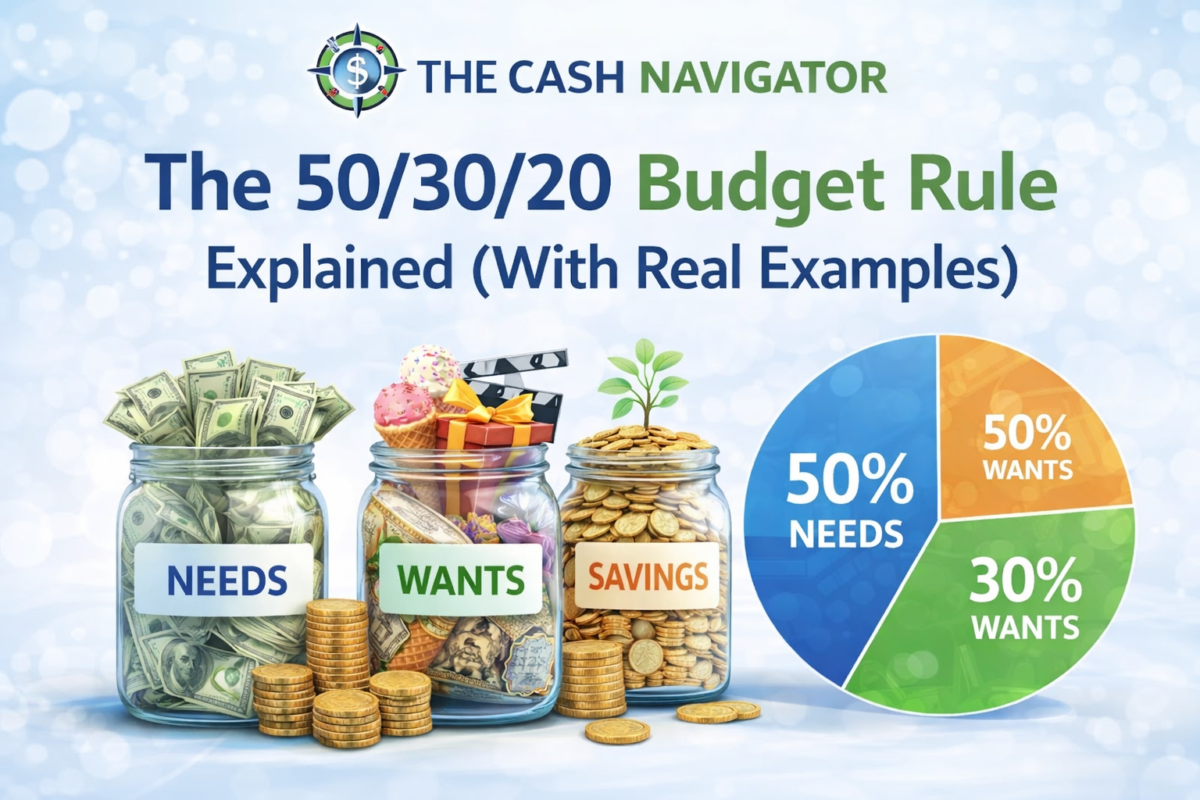
👉 [Live Happy Using the 50/30/20 Budget Rule]
Final Thoughts
The money habits of people who save 30% are not extreme — they’re intentional.
They:
- Control spending
- Automate saving
- Grow income
- Avoid debt
You don’t need perfection. You need consistency.
Start with one habit. Then stack them.
That’s how 30% becomes realistic.
Related Articles
- Best Budgeting Apps in 2026 That Actually Work
- The 30-Day Money Reset
- How to Save Money Fast When You’re Broke
- Emergency Fund Guide
- High Yield Savings Accounts Guide
What are the money habits of people who save 30%
It means setting aside 30% of your total earnings (after or before tax depending on strategy) toward savings, investments, or debt reduction.
Is saving 30% realistic?
Yes. It may require lifestyle adjustments, but many people achieve it through expense control and income growth.
What is the fastest way to reach a 30% savings rate?
Increase income through side hustles or raises
Cut fixed costs like housing and subscriptions
Automate savings to stay consistent
How long does it take to reach a 30% savings rate?
It depends on income and expenses, but most people can gradually reach a 30% savings rate within 6–12 months by reducing spending and increasing income.

