
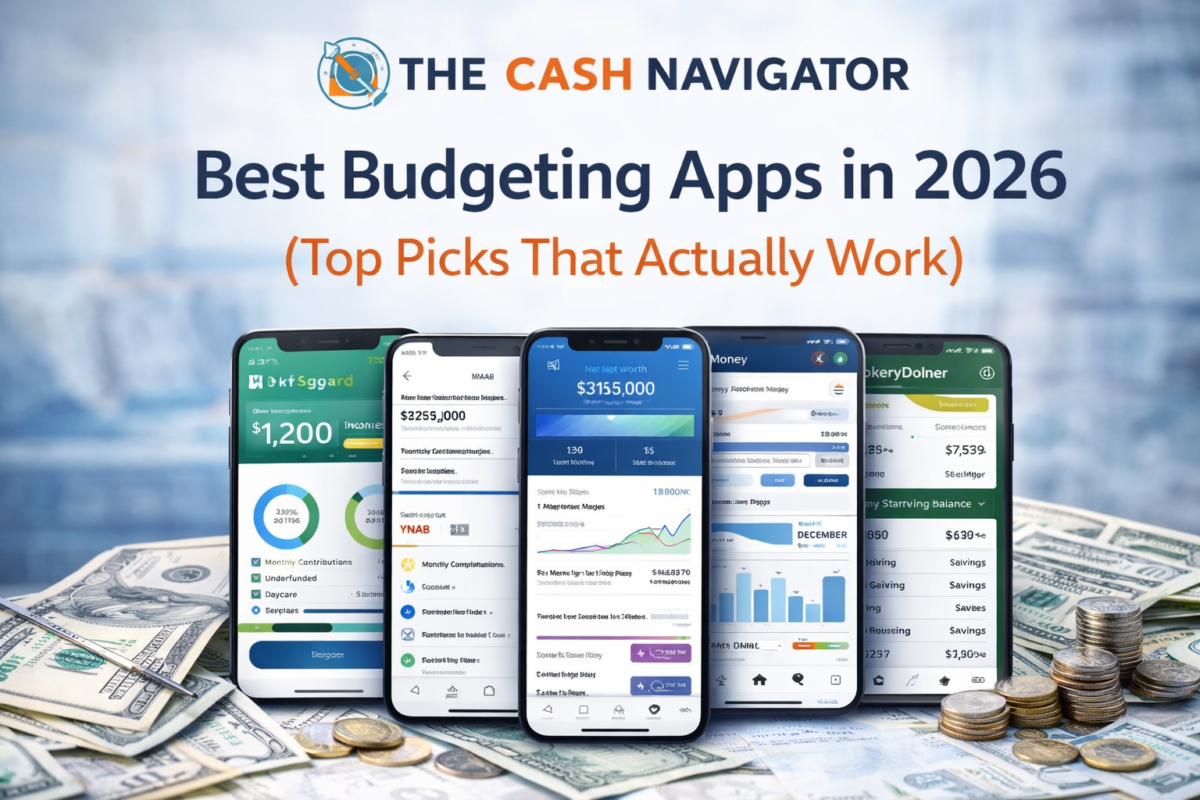
Smart budgeting is easier with the best budgeting apps in 2026. These mobile and web apps link to your bank accounts, automatically categorize spending, and help you set savings goals without spreadsheets. In this guide we compare 7 top apps—including YNAB, EveryDollar, PocketGuard, Monarch, Simplifi, Goodbudget, and Honeydue • Finance App for Couples —with details on pricing, key features, and affiliate programs (where available). For example, PocketGuard links all accounts and shows exactly how much is “safe to spend” each month. YNAB users typically save about $6,000 in the first year by budgeting every dollar. Each app profile explains best-use cases and costs. We also include a chart comparing features side-by-side. Use the app that fits your style and link it with related strategies (see [INTERNAL_LINK: emergency-fund], [INTERNAL_LINK: 30-day-money-reset]) to reach your financial goals faster.
Why Budgeting Apps Matter More Than Ever
If you’re serious about saving money, the best budgeting apps in 2026 are no longer optional—they’re infrastructure.
Manual budgeting fails for one simple reason: humans forget, rationalize, and drift. Apps don’t.
A solid budgeting app does three things:
- Tracks every dollar automatically
- Forces awareness of spending patterns
- Creates friction between impulse and action
If you’ve read our guides like
👉 How to Save Money Fast When You’re Broke
👉 The 30-Day Money Reset (Fix Your Finances Fast)
—you already know awareness is the first lever. Budgeting apps automate that awareness.
What Makes the Best Budgeting Apps in 2026
Not all apps are equal. The best budgeting apps in 2026 share a few key traits:
- Real-time expense tracking
- Bank syncing (secure and reliable)
- Clear budgeting frameworks (not just charts)
- Goal-based saving features
- Low friction (you’ll actually use it daily)
Anything missing these? It’s noise.
1. YNAB (You Need A Budget) — Best for Discipline
Best for: People serious about controlling every dollar
YNAB isn’t passive. It forces you to assign every dollar a job.
That’s powerful.
Instead of tracking what you already spent, YNAB makes you decide before you spend.
Why it stands out
- Zero-based budgeting system
- Strong habit-building framework
- Real-time decision making
Tradeoff
- Learning curve is higher than most apps
- Paid subscription
👉Exclusive Offer: Click Here for a 34-Day Free Trial at YNAB
If you’re following something like the
👉 50/30/20 Budget Rule,
YNAB gives you the structure to actually execute it.
2. Monarch Money — Best All-in-One Financial Dashboard
Best for: People who want everything in one place
Monarch is what Mint should have evolved into.
It combines budgeting, investing tracking, and financial planning into one clean interface.
Why it stands out
- Custom categories and rules
- Household financial tracking
- Net worth tracking built-in
Tradeoff
- Premium pricing
- Less strict than YNAB (more flexible, less discipline)
👉 https://www.monarchmoney.com
If your goal is scaling wealth beyond just saving, this is a strong choice.
3. Rocket Money — How to Cancel Subscriptions Fast
Best for: People trying to save money immediately
Rocket Money shines where most apps don’t: expense reduction.
It identifies subscriptions, negotiates bills, and flags waste.
Why it stands out
- Subscription tracking and cancellation
- Bill negotiation features
- Simple, beginner-friendly interface
Tradeoff
- Less robust budgeting system
- Some features require premium
Pair this with
👉 How to Save $5,000 in One Year
and you’ve got a very practical system.
4. EveryDollar — Best for Simple Budgeting
Best for: Beginners who want clarity without complexity
Created by Dave Ramsey’s team, EveryDollar focuses on simplicity.
It’s basically digital envelope budgeting.
Why it stands out
- Clean, simple interface
- Easy to understand
- Good for beginners
Tradeoff
- Limited automation unless you upgrade
- Less flexible than advanced apps
👉 https://www.ramseysolutions.com/ramseyplus/everydollar
If you’re overwhelmed, start here. Complexity can come later.
5. PocketGuard — Best for Preventing Overspending
Best for: People who constantly overspend
PocketGuard answers one key question:
“How much can I safely spend right now?”
That’s it. And that’s enough for most people.
Why it stands out
- “In My Pocket” feature simplifies decisions
- Automatic categorization
- Good for daily spending control
Tradeoff
- Not as customizable
- Less depth for long-term planning
If you’re living paycheck-to-paycheck, this can stabilize you quickly.
6. Goodbudget — Best Envelope System (Digital Version)
Best for: People who like manual control
Goodbudget doesn’t sync with your bank. That’s intentional.
You manually enter transactions, which creates awareness.
Why it stands out
- Classic envelope budgeting
- Strong behavioral reinforcement
- Great for couples
Tradeoff
- Manual input required
- No automation
Think of this as training wheels for financial discipline.
How to Choose the Right Budgeting App
Here’s the reality: the best budgeting apps in 2026 only work if you actually use them.
So don’t overthink it. Match the app to your personality:
- Control freak? → YNAB
- Big picture thinker? → Monarch
- Trying to cut expenses fast? → Rocket Money
- Beginner? → EveryDollar
- Overspender? → PocketGuard
The tool matters less than consistency.
Common Mistakes People Make
Most people fail budgeting not because of the app—but because of behavior.
Watch for these:
- Downloading 3 apps and using none
- Tracking expenses but not changing behavior
- Ignoring small daily spending
- Not setting clear savings targets
If this sounds familiar, go back and read:
👉 The 30-Day Money Reset
That’s your behavioral reset.
Final Thoughts: Tools Don’t Save You — Systems Do
Budgeting apps are not magic.
They’re mirrors.
The uncomfortable truth: most people already know where their money is going. They just avoid looking.
The best budgeting apps in 2026 remove that avoidance.
Start simple:
- Pick one app
- Use it daily for 30 days
- Track everything
- Adjust behavior
That’s it.
Consistency beats perfection every time.
Related Articles (Internal Links)
How Much Emergency Fund Should You Have
How to Save Money Fast When You’re Broke
The 30-Day Money Reset (Fix Your Finances Fast)
Leave a Reply